Search
Search for projects and tokens by name or address
 Jovay
JovayJovay
There are impactful changes and part of the information might be outdated.
Badges
About
Jovay, by Ant Digital Technologies, is an Ethereum Layer 2 blockchain built for real-world assets and users.
About
Jovay, by Ant Digital Technologies, is an Ethereum Layer 2 blockchain built for real-world assets and users.
Why is the project listed in others?
Consequence: projects without a proper proof system fully rely on single entities to safely update the state. A malicious proposer can finalize an invalid state, which can cause loss of funds.
Learn more about the recategorisation here.
The section shows the operating costs that L2s pay to Ethereum.
This section shows how much data the project publishes to Ethereum over time. It leaves out data posted to other data-availability (DA) layers. The project currently posts data to Ethereum.
This section shows how "live" the project's operators are by displaying how frequently they submit transactions of the selected type. It also highlights anomalies - significant deviations from their typical schedule.
Funds can be stolen if
Users can be censored if
MEV can be extracted if
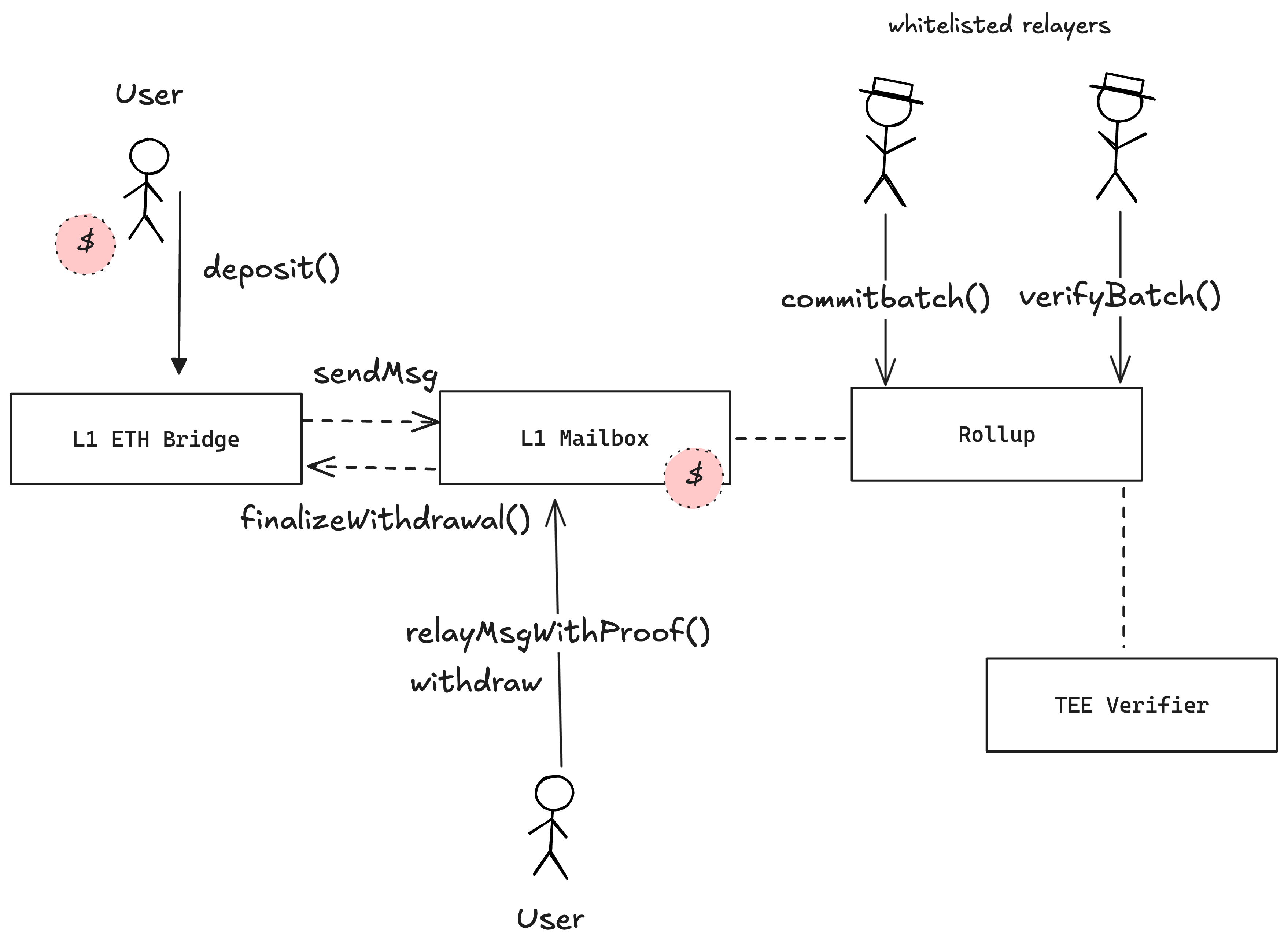
Users can submit transactions to an L1Layer 1 (L1) is a blockchain that is self-reliant on its validator set for its security and consensus properties. Ethereum is an example of a layer 1. Blockchains started receiving the moniker of layer 1 once layer 2 became a meaningful area of development. queue, but can’t force them. The sequencers cannot selectively skip transactions but can stop processing the queue entirely. In other words, if the sequencers censor or are down, they are so for everyone.
State rootsA cryptographic hash succinctly representing a state using a Merkle tree. are accepted when attested by a permissioned TEE through the TEEVerifierProxy. There is no challenge mechanism and no validity proofs can be submitted.
All of the data needed for proof construction is published on Ethereum L1Layer 1 (L1) is a blockchain that is self-reliant on its validator set for its security and consensus properties. Ethereum is an example of a layer 1. Blockchains started receiving the moniker of layer 1 once layer 2 became a meaningful area of development..
There is no window for users to exit in case of an unwanted upgrade since contracts are instantly upgradable.
Only the whitelisted proposers can publish state rootsA cryptographic hash succinctly representing a state using a Merkle tree. on L1Layer 1 (L1) is a blockchain that is self-reliant on its validator set for its security and consensus properties. Ethereum is an example of a layer 1. Blockchains started receiving the moniker of layer 1 once layer 2 became a meaningful area of development., so in the event of failure the withdrawals are frozen.
All data required for proofs is published on chain
All the data that is used to construct the system state is published on chain in the form of cheap blobsThe data that a rollup publishes to its L1/data availability (DA) layer. They consist of the L2 transactions that are rolled up, along with some metadata. Blobs are introduced as a new transaction type within Ethereum with EIP-4844, and has rollup scaling specifically in mind. Blobs persist on Ethereum’s Beacon Chain ephemerally. or calldata. This ensures that it will be available for enough time.
- Rollup.sol - commitBatch stores calldata hashes for each batch
- L1Mailbox.sol - sendMsg enqueues transactions on Ethereum
EthereumPast upgrades
The metrics include upgrades on the currently used proxy contracts. Historical proxy contracts and changes of such are not included.
2025 November 06, 15:42 UTC11changesInclude deployer address
Include deployer address
New and verified contracts
| contract ProxyAdmin (eth:0xe2f33Bd70B301F53f61CB7b22D852bC8e3D95E2b) { | |
| +++ description: None | |
| name: | |
| - | "" |
| + | "ProxyAdmin" |
| unverified: | |
| - | true |
| receivedPermissions: | |
| - | [{"permission":"upgrade","from":"eth:0x922248Db4A99bB542539ae7165FB9D7A546FB9F1","role":"admin"},{"permission":"upgrade","from":"eth:0x9869A90FDAc287519E48aff4cCE329907a995162","role":"admin"},{"permission":"upgrade","from":"eth:0xe0a28B8918a62edB825055221a1dF12c7C81Bac1","role":"admin"}] |
| values.owner: | |
| + | "eth:0x4815b8773E6686d0b6Ee16191Aef1ae6c50d6B77" |
| implementationNames.eth:0xe2f33Bd70B301F53f61CB7b22D852bC8e3D95E2b: | |
| - | "" |
| + | "ProxyAdmin" |
| template: | |
| + | "global/ProxyAdmin" |
| sourceHashes: | |
| + | ["0x68f689a23d3badd91255602a1eb13d4789baedc16d904c3103244642fc78ca8f"] |
| directlyReceivedPermissions: | |
| + | [{"permission":"upgrade","from":"eth:0x922248Db4A99bB542539ae7165FB9D7A546FB9F1","role":"admin"},{"permission":"upgrade","from":"eth:0x9869A90FDAc287519E48aff4cCE329907a995162","role":"admin"},{"permission":"upgrade","from":"eth:0xe0a28B8918a62edB825055221a1dF12c7C81Bac1","role":"admin"}] |
| deployerAddress: | |
| + | "eth:0xA1e7758a84B40Ba7AA1a80b3D3096E918A7950bB" |
| } | |
| + | Status: CREATED |
| contract (eth:0x4815b8773E6686d0b6Ee16191Aef1ae6c50d6B77) | |
| +++ description: None | |
| + | Status: CREATED |
| contract (eth:0x83088c8Dd196a83f43140ddBD7B4727bD1d43AD4) | |
| +++ description: None | |
2025 October 31, 10:51 UTC12changesFirst discovery.
First discovery.
Initial discovery
| + | Status: CREATED |
| contract DcapAttestationRouter (eth:0x238f4DaFC22013a864f85a54E276aC99975566fA) | |
| +++ description: The DcapAttestationRouter contract is used for routing and verifying Intel SGX/TDX DCAP attestation proofs. The contract sends each quote to the corresponding verification path (cache verifier vs. Automata DCAP contract, and SGX vs. TDX measurement checks). | |
| + | Status: CREATED |
| contract MeasurementDao (eth:0x359437E2763e9622DD4324D7904BbF7516332D4F) | |
| +++ description: The MeasurementDao contract is an onchain registry that allowlists SGX MR_ENCLAVE<->MR_SIGNER pairs and TDX RTMR3/MRTD values, and verifies DCAP quotes by matching quote fields to the stored measurements. | |
| + | Status: CREATED |
| contract TEEVerifierProxy (eth:0x371a8bda9a34d641B546883D6B5895d0A44AD46A) | |
| +++ description: The TEEVerifierProxy contract is used to verify L2 batches using TEE attestations. It delegates proof verification to the dcapAttestationRouter contract. | |
| + | Status: CREATED |
| contract DaimoP256Verifier (eth:0x783377992FCA09009eaD952D4fBa6519e25726b4) | |
| +++ description: None | |
| + | Status: CREATED |
| contract TEEVerifierProxyOwner (eth:0x79241BbE3646d8405849Cbe8608e77b82c402892) | |
| +++ description: None | |
| + | Status: CREATED |
| contract L1ETHBridge (eth:0x922248Db4A99bB542539ae7165FB9D7A546FB9F1) | |
| +++ description: The L1ETHBridge contract is used to bridge ETH between the L1 and L2. | |
| + | Status: CREATED |
| contract TEECacheVerifier (eth:0x9734CcA9304A4c7a5a27bCFac9eDa23e09cBAaF2) | |
| +++ description: A cache-enabled P-256 ECDSA verifier for Intel SGX/TDX DCAP quotes (v3/v4/v5) that authenticates local attestation data, extracts the 32-byte commitment, and lets the owner/authorized callers initialize, manage, and reuse cached attestation keys to skip repeat verifications. | |
| + | Status: CREATED |
| contract L1Mailbox (eth:0x9869A90FDAc287519E48aff4cCE329907a995162) | |
| +++ description: The L1Mailbox contract is used to send messages to the L2. | |
| + | Status: CREATED |
| contract AutomataDcapAttestationFee (eth:0xb3a96165caf30F8F7cE9BCfdaaAe99BA93C1A6F9) | |
| +++ description: Contract used to charge a configurable basis-point fee to verify Intel DCAP quotes. Currently set to 0 basis points. | |
| + | Status: CREATED |
| contract Rollup (eth:0xe0a28B8918a62edB825055221a1dF12c7C81Bac1) | |
| +++ description: The Rollup contract is used to submit and verify L2 batches. | |
| + | Status: CREATED |
| contract (eth:0xe2f33Bd70B301F53f61CB7b22D852bC8e3D95E2b) | |
| +++ description: None | |
| + | Status: CREATED |
| contract (eth:0xf2A2Bee383C2e4d75d9aE5953b3A6cFABb661a47) | |
| +++ description: None | |
The system has a centralized operator
The operatorAn operator is the entity charged with managing a rollup and progressing its state. A rollup operator can be a centralized sequencer, proposer, prover, challenger, pauser of admin that is able to perform upgrades. is the only entity that can propose blocksAn ordered list of transactions and chain-related metadata that gets bundled together and published to the L1/DA layer. Nodes execute the transactions contained within blocks to change the rollup chain’s state. Protocol rules dictate what constitutes a valid block, and invalid blocks are skipped over.. A live and trustworthy operator is vital to the health of the system.
MEV can be extracted if the operator exploits their centralized position and frontruns user transactions.
Users can enqueue transactions
Users can submit transactions to an L1Layer 1 (L1) is a blockchain that is self-reliant on its validator set for its security and consensus properties. Ethereum is an example of a layer 1. Blockchains started receiving the moniker of layer 1 once layer 2 became a meaningful area of development. queue, but can’t force them. The sequencerA party responsible for ordering and executing transactions on the rollup. The sequencer verifies transactions, compresses the data into a block, and submits the data related to it to enable state reconstruction to Ethereum L1 as a single transaction. The data can be either transaction data or state diffs. cannot selectively skip transactions but can stop processing the queue entirely. In other words, if the sequencer censors or is down, it is so for everyone.
Users can be censored if the operator is offline or refuses to process the queue.
Regular messaging
The user initiates L2Layer 2 (L2) is a category of technical solutions aimed to scale the base layer in a trust minimized way. This category includes solutions like rollups as well as state channels and plasma. Other solutions are able to scale further, but with the introduction of additional trust assumptions, which are therefore not trust minimized. Sometimes the term Layer 2 is used to refer to include these solutions too, like validiums and optimiums, but to distinguish between trust minimized and non trust minimized solutions they are often referred to as "light" L2s, opposed to "strong" L2s like rollups.->L1Layer 1 (L1) is a blockchain that is self-reliant on its validator set for its security and consensus properties. Ethereum is an example of a layer 1. Blockchains started receiving the moniker of layer 1 once layer 2 became a meaningful area of development. messages by submitting a regular transaction on this chain. When the blockAn ordered list of transactions and chain-related metadata that gets bundled together and published to the L1/DA layer. Nodes execute the transactions contained within blocks to change the rollup chain’s state. Protocol rules dictate what constitutes a valid block, and invalid blocks are skipped over. containing that transaction is settled, the message becomes available for processing on L1.
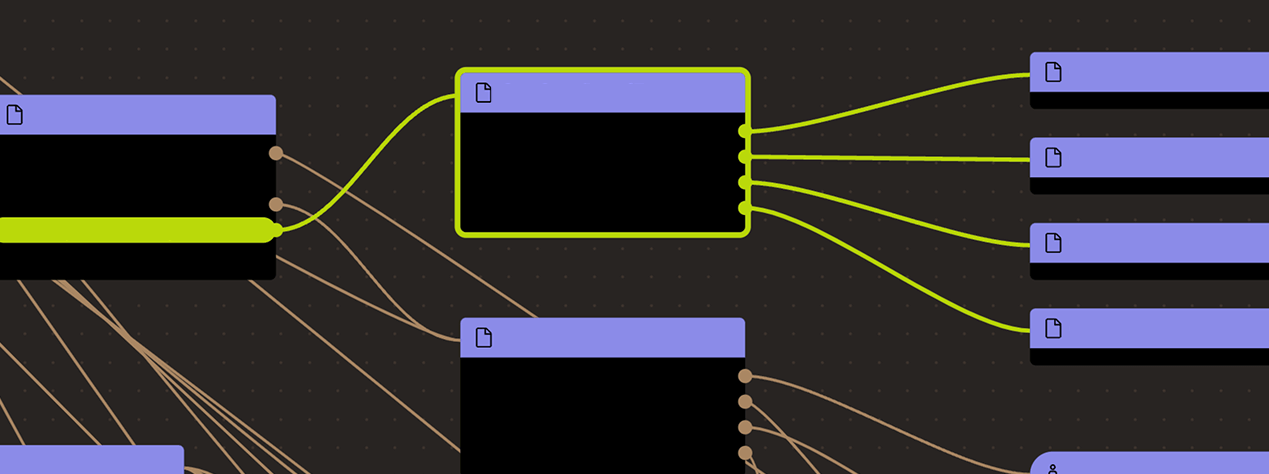
Ethereum
Actors:
- Can upgrade with no delay
- L1ETHBridge ProxyAdmin
- L1Mailbox ProxyAdmin
- RollupA blockchain that inherits consensus and data availability from another blockchain called L1. Rollups enable trust minimized bridges with the base layer via proof systems, either optimistic or zero-knowledge. A rollup without a bridge, or without considering the bridge, is called a sovereign rollup. ProxyAdmin
- Can upgrade with no delay *
- Can upgrade with no delay
- TEEVerifierProxyOwner
- Can interact with RollupA blockchain that inherits consensus and data availability from another blockchain called L1. Rollups enable trust minimized bridges with the base layer via proof systems, either optimistic or zero-knowledge. A rollup without a bridge, or without considering the bridge, is called a sovereign rollup.
- Allowed to commit transactions from the current layer to the host chain
- Allowed to post new state rootsA cryptographic hash succinctly representing a state using a Merkle tree. of the current layer to the host chain
Ethereum
The DcapAttestationRouter contract is used for routing and verifying Intel SGX/TDX DCAP attestation proofs. The contract sends each quote to the corresponding verification path (cache verifierAn entity in a ZK-Rollup, often a smart contract, that verifies zero-knowledge proofs submitted by a prover. vs. Automata DCAP contract, and SGX vs. TDX measurement checks).
The MeasurementDao contract is an onchain registry that allowlists SGX MR_ENCLAVE<->MR_SIGNER pairs and TDX RTMR3/MRTD values, and verifies DCAP quotes by matching quote fields to the stored measurements.
The TEEVerifierProxy contract is used to verify L2Layer 2 (L2) is a category of technical solutions aimed to scale the base layer in a trust minimized way. This category includes solutions like rollups as well as state channels and plasma. Other solutions are able to scale further, but with the introduction of additional trust assumptions, which are therefore not trust minimized. Sometimes the term Layer 2 is used to refer to include these solutions too, like validiums and optimiums, but to distinguish between trust minimized and non trust minimized solutions they are often referred to as "light" L2s, opposed to "strong" L2s like rollups. batches using TEE attestations. It delegates proof verification to the dcapAttestationRouter contract.
- Roles:
- admin: The source code of this contract is not verified on Etherscan.
A cache-enabled P-256 ECDSA verifierAn entity in a ZK-Rollup, often a smart contract, that verifies zero-knowledge proofs submitted by a prover. for Intel SGX/TDX DCAP quotes (v3/v4/v5) that authenticates local attestation data, extracts the 32-byte commitment, and lets the owner/authorized callers initialize, manage, and reuse cached attestation keys to skip repeat verifications.
Contract used to charge a configurable basis-point fee to verify Intel DCAP quotes. Currently set to 0 basis points.
- Roles:
- owner:
The L1Mailbox contract is used to send messages to the L2Layer 2 (L2) is a category of technical solutions aimed to scale the base layer in a trust minimized way. This category includes solutions like rollups as well as state channels and plasma. Other solutions are able to scale further, but with the introduction of additional trust assumptions, which are therefore not trust minimized. Sometimes the term Layer 2 is used to refer to include these solutions too, like validiums and optimiums, but to distinguish between trust minimized and non trust minimized solutions they are often referred to as "light" L2s, opposed to "strong" L2s like rollups..
- Roles:
- admin: ProxyAdmin
The RollupA blockchain that inherits consensus and data availability from another blockchain called L1. Rollups enable trust minimized bridges with the base layer via proof systems, either optimistic or zero-knowledge. A rollup without a bridge, or without considering the bridge, is called a sovereign rollup. contract is used to submit and verify L2Layer 2 (L2) is a category of technical solutions aimed to scale the base layer in a trust minimized way. This category includes solutions like rollups as well as state channels and plasma. Other solutions are able to scale further, but with the introduction of additional trust assumptions, which are therefore not trust minimized. Sometimes the term Layer 2 is used to refer to include these solutions too, like validiums and optimiums, but to distinguish between trust minimized and non trust minimized solutions they are often referred to as "light" L2s, opposed to "strong" L2s like rollups. batches.
- Roles:
- admin: ProxyAdmin
- relayer: EOA 1, EOA 2
The L1ETHBridge contract is used to bridgeA message-passing protocol between two blockchains. At its most basic, a token bridge consists of a smart contract which can escrow funds on one side of the bridge, and instruct the release or minting of corresponding assets on the other side, but bridges could also support arbitrary messages. How these instructions are validated is a critical factor in assessing the trust assumptions of a bridge. ETH between the L1Layer 1 (L1) is a blockchain that is self-reliant on its validator set for its security and consensus properties. Ethereum is an example of a layer 1. Blockchains started receiving the moniker of layer 1 once layer 2 became a meaningful area of development. and L2Layer 2 (L2) is a category of technical solutions aimed to scale the base layer in a trust minimized way. This category includes solutions like rollups as well as state channels and plasma. Other solutions are able to scale further, but with the introduction of additional trust assumptions, which are therefore not trust minimized. Sometimes the term Layer 2 is used to refer to include these solutions too, like validiums and optimiums, but to distinguish between trust minimized and non trust minimized solutions they are often referred to as "light" L2s, opposed to "strong" L2s like rollups..
- Roles:
- admin: ProxyAdmin
The current deployment carries some associated risks:
Funds can be stolen if a contract receives a malicious code upgrade. There is no delay on code upgrades (CRITICAL).
Funds can be stolen if the source code of unverified contracts contains malicious code (CRITICAL).