Search
Search for projects by name or address
 Payy
PayyPayy
The protocol was exploited on September 24, 2026. Do not deposit funds.
Badges
About
Payy is a payments-focused ZK network for private stablecoin transfers, settled on Ethereum with aggregated validity proofs and validator signatures, while transaction data is kept offchain.
Badges
About
Payy is a payments-focused ZK network for private stablecoin transfers, settled on Ethereum with aggregated validity proofs and validator signatures, while transaction data is kept offchain.
Payy is a payments-focused ZK networkA constellation of nodes (peers) that communicate via a peer-to-peer protocol, for example, in propagating transactions and blocks to other nodes., designed around private stablecoin transfers. Ethereum receives only state rootsA cryptographic hash succinctly representing a state using a Merkle tree. and the public deposit and withdrawal messages of each state updateA mechanism that allows to update the claimed state of a project. It usually involves verifying a state transition proof, but it can also be done in a trusted manner by a permissioned actor.. Balances live offchain as UTXO-style notes whose commitments form a sparse Merkle treeA hash-based data structure in which each leaf node is a hash of a block of data, and each non-leaf node is a hash of its children. The root of the tree is a cryptographic fingerprint of the entire data structure. Merkle trees (Merkle Patricia Tries) are used in Ethereum to efficiently store key-value pairs. maintained by the Payy validatorsIn the context of L2s, a Validator is an actor that validates the correctness of state transitions. For optimistic rollups this corresponds to challengers, and for ZK rollups this corresponds to the onchain verifier.
Privacy considerations
To spend notes, the user’s clientSometimes labelled interchangeably as a “node”, they are tasked with processing transactions and managing the blockchains's state. They run the computations for each transaction according to the rollup's virtual machine and protocol rules. If comparing to Ethereum clients, these would be execution clients such as Geth, as opposed to consensus clients. generates a Noir utxo proof that demonstrates ownership of the input notes and conservation of value; the public inputs of that proof are the commitments of the two notes consumed and the two notes created. Transfers therefore hide who paid whom and how much, but they do not hide which commitments were consumed: the deployed circuits do not use nullifiers, and a spend names its input commitments directly, which the nodeA software client that participates in the network. then marks as spent. Anyone with Payy blockAn ordered list of transactions and chain-related metadata that gets bundled together and published to the L1/DA layer. Nodes execute the transactions contained within blocks to change the rollup chain’s state. Protocol rules dictate what constitutes a valid block, and invalid blocks are skipped over. data can follow the resulting spend graph.
Because only commitments are stored in the tree, a recipient cannot reconstruct a received note from chain data alone: the sender must transmit the note contents out of band. In practice it is done by an encrypted registry operated by Payy, which stores the recipient’s public key in the clear and serves each client the entries addressed to it. Thus it learns the delivery metadata even though it cannot read note contents.
Fees
The protocol charges no transfer or withdrawal fee.
Compliance
The deployed protocol enforces no compliance measures and contains no auditor key, view key or other mechanism that could retroactively decrypt past activity. Identity data is collected at the application layer: KYC is required for the Payy card and fiat ramps, but it is not necessary for using Payy L2Layer 2 (L2) is a category of technical solutions aimed to scale the base layer in a trust minimized way. This category includes solutions like rollups as well as state channels and plasma. Other solutions are able to scale further, but with the introduction of additional trust assumptions, which are therefore not trust minimized. Sometimes the term Layer 2 is used to refer to include these solutions too, like validiums and optimiums, but to distinguish between trust minimized and non trust minimized solutions they are often referred to as "light" L2s, opposed to "strong" L2s like rollups..
Anonymity setIn privacy protocols, anonymity set denotes all users, to which a particular withdrawal could be plausibly attributed. Anonymity set depends on a particular withdrawal, the size of the anonymity set is a metric for level of user's privacy.
Payy hides the contents of each note but not the links between notes, so its anonymity set should not be read as the set of all users. An observer of Payy block data sees a graph of opaque commitments; privacy rests on not knowing which address, asset or amount each node in that graph carries.
What the protocol promises: Promises private stablecoin transfers. Delivers hidden amounts and note owners over a public spend graph: which notes fund which, and every deposit and withdrawal, is public.
Ethereum is public by default. Each protocol is rated on its main privacy promise, like hiding who paid, who received, how much, or which deposit became which withdrawal. Against each adversary, the colour says whether it holds for a careful user with the app's own settings: green yes, yellow only with significant extra work, red no. Fields marked at risk stay private only under the condition in their note.
Every transaction names the notes it spends and creates, so which notes fund which is public by design; only the amount and owner of a note are hidden. Empty padding notes have a zero commitment, so single-input and single-output transactions are recognizable. All blocksAn ordered list of transactions and chain-related metadata that gets bundled together and published to the L1/DA layer. Nodes execute the transactions contained within blocks to change the rollup chain’s state. Protocol rules dictate what constitutes a valid block, and invalid blocks are skipped over. and proofs are served openly, and each deposit or withdrawal shows address and amount and points at one nodeA software client that participates in the network. of that graph. The per-transaction proofs use a flavor whose authors document that it is not zero-knowledgeA cryptographic technology and sub-discipline of cryptography that allows an individual to prove that a statement or computation is true without revealing any additional information.; how much of a note it leaks is not established.
Advice: Withdraw to an address that cannot be tied to you, and never an amount that matches a deposit.
Along a path without splits or merges the public deposit and withdrawal amounts fix every amount in between, and the graph shows who paid whom end to end. Each wallet has one fixed deposit address, so all its deposits link to each other and to whoever funded them.
Advice: Keep funds in the network across many transfers; only a split or merge stops amounts from being inferred. Fund the deposit address from a wallet that is not yours to keep.
The payment-link website loads a third-party analytics script that records the page URL, which holds the redeem secret of the link, and reports a device fingerprint to the backend. On the other hand, proofs are built on your device and the app talks only to the operatorAn operator is the entity charged with managing a rollup and progressing its state. A rollup operator can be a centralized sequencer, proposer, prover, challenger, pauser of admin that is able to perform upgrades.’s servers.
Advice: Redeem payment links in the app, not in a browser.
One company runs the only validatorIn the context of L2s, a Validator is an actor that validates the correctness of state transitions. For optimistic rollups this corresponds to challengers, and for ZK rollups this corresponds to the onchain verifier and proverAn entity that generates the cryptographic proof to convince the verifier that the statement is true. In a ZK-Rollup, the prover generates the ZK (validity) proof to submit to the verifier contract., the nodeA software client that participates in the network., the note registry, the deposit relayer and the KYC checks. Its backend ties each session to a wallet address and keeps, per wallet, the deposit address, KYC record, country, IP country and the commitment and owner of every note the app reports. For payment links and fiat ramps it holds the notes’ private keys and can read and spend them. It can drop your withdrawals, and its owner can rewrite the state rootA cryptographic hash succinctly representing a state using a Merkle tree. with no delay.
Advice: Use only ordinary transfers for anything you want to keep private. Links, ramps and the card hand the operator the note keys.
Every per-transaction proof is public forever and not zero-knowledgeA cryptographic technology and sub-discipline of cryptography that allows an individual to prove that a statement or computation is true without revealing any additional information., so whatever it leaks stays available to future compute, and a discrete-log break opens the commitments inside it. Registry ciphertexts use elliptic-curve key exchange. If the operatorAn operator is the entity charged with managing a rollup and progressing its state. A rollup operator can be a centralized sequencer, proposer, prover, challenger, pauser of admin that is able to perform upgrades. retains them, whoever breaks elliptic-curve cryptography opens every note delivered through it.
Critical circuit vulnerability disclosed
2026 Jun 10th
An aggregation circuitA program written for the purpose of being proven within a proving system. A circuit is a mathematical representation of the computation to be executed, arithmetic circuits and zkVM execution trace are examples of circuits. Circuits can be written in different languages, ranging from low-level to high-level. bug allowed forged burn messages, was patched by the team.
Payy Network is live on Ethereum
2026 Feb 19th
Payy launches its rollupA blockchain that inherits consensus and data availability from another blockchain called L1. Rollups enable trust minimized bridges with the base layer via proof systems, either optimistic or zero-knowledge. A rollup without a bridge, or without considering the bridge, is called a sovereign rollup. on Ethereum, migrating from its previous deployment on Polygon.
Funds can be stolen if
- the proof systemThe infrastructure that allows projects to verify their state transitions. It is composed by onchain verifiers and offchain provers. The main two flavors are optimistic and ZK proof systems, but they can be combined in a hybrid model. In general though, if a system is able to accept state roots optimistically, even if it has a ZK component, it is considered an optimistic proof system. is broken and a malicious validatorIn the context of L2s, a Validator is an actor that validates the correctness of state transitions. For optimistic rollups this corresponds to challengers, and for ZK rollups this corresponds to the onchain verifier is registered, allowing forged spends or withdrawals.
- the PayyMultisig upgrades the RollupA blockchain that inherits consensus and data availability from another blockchain called L1. Rollups enable trust minimized bridges with the base layer via proof systems, either optimistic or zero-knowledge. A rollup without a bridge, or without considering the bridge, is called a sovereign rollup. contract or directly overwrites the state rootA cryptographic hash succinctly representing a state using a Merkle tree. to a malicious version.
Funds can be lost if
- a user loses the note data or the keys required to spend their notes.
- the offchain transaction data becomes unavailable, as data availabilityThe property of a rollup's data being reachable by any node retrieving the data that were rolled up and executed to reach the proposed state. Data availability (DA), specifically decoupling it from the rollup nodes themselves, is one of the preeminent factors which allows a rollup to scale securely. A rollup is faced with a decision of what to use as a DA layer to guarantee that any node can retrieve this data--permissionlessly under any circumstance. For this reason, using Ethereum for DA currently provides the strongest security guarantees. If data is stored somewhere other than a permissionless L1, then the project is not a rollup, but rather a validium or an optimium. is not verified on Ethereum.
- the operators stop including withdrawals in proven state updates, as there is no forced exit mechanism.
Privacy can be lost if
- the Payy-operated note registry, note lookup or wallet backup services are compromised or their records are disclosed, revealing which addresses receive and hold which notes and who transacted with whom.
All privileged functions are ultimately controlled by the PayyMultisig (2/4). It owns the ProxyAdmin, which can instantly upgrade the RollupA blockchain that inherits consensus and data availability from another blockchain called L1. Rollups enable trust minimized bridges with the base layer via proof systems, either optimistic or zero-knowledge. A rollup without a bridge, or without considering the bridge, is called a sovereign rollup. proxy, and it is the owner of the Rollup contract, allowing it to manage provers, validatorsIn the context of L2s, a Validator is an actor that validates the correctness of state transitions. For optimistic rollups this corresponds to challengers, and for ZK rollups this corresponds to the onchain verifier, ZK verifiers, supported tokens and burn substitutors, and to directly overwrite the state rootA cryptographic hash succinctly representing a state using a Merkle tree. via setRoot(). There is no timelock or exit windowThe amount of time that users have to exit a system before an unwanted upgrade. It takes into account upgrade delays, forced transaction delays and other time factors. To be considered Stage 1, a rollup needs to have an exit window of at least 7d if upgrades are initiated by a permissioned actor less decentralized than a Security Council. For Stage 2, a rollup needs at least 30d in all cases outside of onchain provable bugs. on any of these actions.
Aztec Ignition
Detailed description
Aztec Ignition is a trusted setupGeneration of a piece of data that must then be used for some cryptographic protocol to run. Generating this data requires some secret information. The "trust" comes from the fact the secret must be destroyed after the ceremony, otherwise cryptographic properties of the protocol could be broken. Once the data is generated, and the secrets are forgotten, no further participation from the creators of the ceremony is required. There are two types of trusted setups for SNARKs: (i) trusted setup per circuit where it is generated from scratch for each circuit, (ii) trusted universal setup per proving system where it can be used for several circuits. ceremony for KZG commitmentsA polynomial commitment scheme that allows a prover to compute a commitment to a polynomial, with the properties that this commitment can later be opened at any position: the prover shows that the value of the polynomial at a certain position is equal to a claimed value. KZG is widely used as it’s applicable both for univariate and k-variate polynomials, is efficient for batch proofs, and is able to generate many proofs at once relatively fast. It is also proof generation time efficient: the time for prover to commit to a polynomial is linear on the degree of the polynomial. over BN254 curve that was run by Aztec for KZG commitment over BN254 curve in 2019. It included 176 participants and was publicly open for participation.
- Github repo to download and verify the ceremony artifacts: https://github.com/AztecProtocol/ignition-verification.
- Github repo with instructions for ceremony participants: https://github.com/AztecProtocol/Setup.
- Ceremony announcement with a call to participate: https://aztec.network/blog/announcing-ignition.
2026 August 25, 10:47 UTC4changesDiscovery rerun on the same block number with only config-related changes.
Discovery rerun on the same block number with only config-related changes.
Initial discovery
| + | Status: CREATED |
| contract HonkVerifier (eth:0x14DACD534ddc676601B27f41Eb541a7951524a2F) [payy/HonkVerifier] | |
| +++ description: UltraHonk proof verifier generated with Aztec's Barretenberg from Payy's final aggregation Noir circuit. It verifies the aggregated validity proof of each state update submitted to the Rollup contract. | |
| + | Status: CREATED |
| contract PayyMultisig (eth:0x230Dfb03F078B0d5E705F4624fCC915f3126B40f) [GnosisSafe] | |
| +++ description: None | |
| + | Status: CREATED |
| contract RollupV1 (eth:0x367C1eAF14AA06b78ce76bd0243297de79d85270) [payy/Rollup] | |
| +++ description: Main contract of the Payy ZK rollup. It stores the state root, escrows USDC backing the notes on the rollup, processes deposits (mints) and withdrawals (burns), and accepts state updates that must include an aggregated ZK proof and signatures from more than 2/3 of the current validator set. | |
| + | Status: CREATED |
| contract ProxyAdmin (eth:0xfE455baCAF1968F1Ae6a322b8Ffbe56840e2f590) [global/ProxyAdmin] | |
| +++ description: None | |
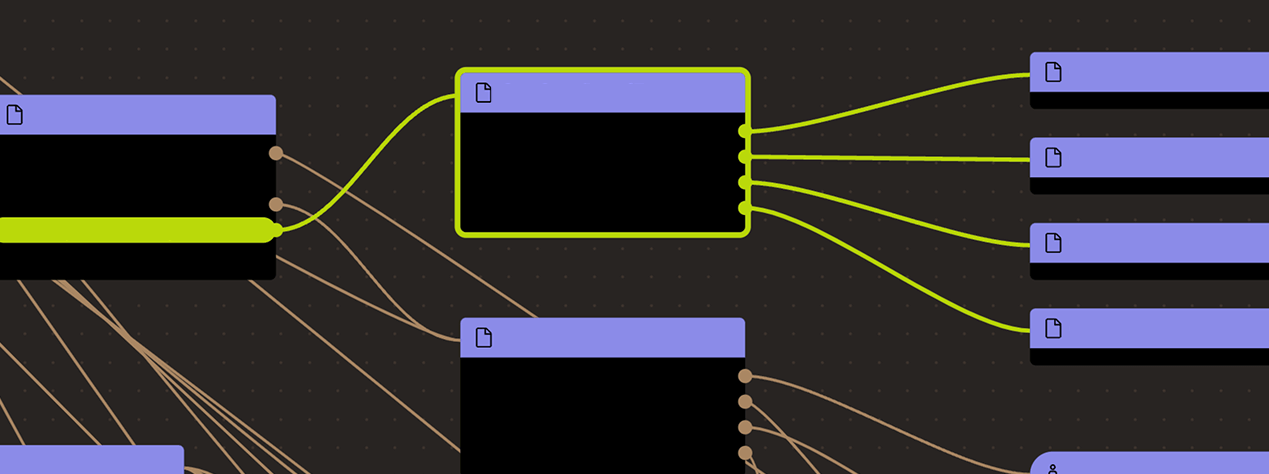
Ethereum
Actors:
A Multisig with 2/4 threshold.
- Can upgrade with no delay
- RollupV1 ProxyAdmin
- Can interact with RollupV1
- can manage provers, validatorsIn the context of L2s, a Validator is an actor that validates the correctness of state transitions. For optimistic rollups this corresponds to challengers, and for ZK rollups this corresponds to the onchain verifier, ZK verifiers, supported tokens and burn substitutors, and can overwrite the current state rootA cryptographic hash succinctly representing a state using a Merkle tree. via setRoot()
- Can interact with RollupV1
- can sign state updates as a validatorIn the context of L2s, a Validator is an actor that validates the correctness of state transitions. For optimistic rollups this corresponds to challengers, and for ZK rollups this corresponds to the onchain verifier. Signatures from more than 2/3 of the current validator set are required for each update
- Can interact with RollupV1
- can submit state updates (new state rootsA cryptographic hash succinctly representing a state using a Merkle tree.) via verifyRollup(), providing an aggregated ZK proof and validatorIn the context of L2s, a Validator is an actor that validates the correctness of state transitions. For optimistic rollups this corresponds to challengers, and for ZK rollups this corresponds to the onchain verifier signatures
Ethereum
UltraHonk proof verifierAn entity in a ZK-Rollup, often a smart contract, that verifies zero-knowledge proofs submitted by a prover. generated with Aztec’s Barretenberg from Payy’s final aggregation Noir circuitA program written for the purpose of being proven within a proving system. A circuit is a mathematical representation of the computation to be executed, arithmetic circuits and zkVM execution trace are examples of circuits. Circuits can be written in different languages, ranging from low-level to high-level.. It verifies the aggregated validity proofThe output of a cryptographic proving system attesting to correct computation. ZK-Rollups use succinct validity proofs (also called zero-knowledge proofs) to prove a batch of rollup transactions and blocks were properly executed. Validity proofs are submitted to a verifier, such as an Ethereum smart contract, which accepts them if properly constructed. of each state updateA mechanism that allows to update the claimed state of a project. It usually involves verifying a state transition proof, but it can also be done in a trusted manner by a permissioned actor. submitted to the RollupA blockchain that inherits consensus and data availability from another blockchain called L1. Rollups enable trust minimized bridges with the base layer via proof systems, either optimistic or zero-knowledge. A rollup without a bridge, or without considering the bridge, is called a sovereign rollup. contract.
Main contract of the Payy ZK rollupA blockchain that inherits consensus and data availability from another blockchain called L1. Rollups enable trust minimized bridges with the base layer via proof systems, either optimistic or zero-knowledge. A rollup without a bridge, or without considering the bridge, is called a sovereign rollup.. It stores the state rootA cryptographic hash succinctly representing a state using a Merkle tree., escrows USDC backing the notes on the rollup, processes deposits (mints) and withdrawals (burns), and accepts state updates that must include an aggregated ZK proof and signatures from more than 2/3 of the current validatorIn the context of L2s, a Validator is an actor that validates the correctness of state transitions. For optimistic rollups this corresponds to challengers, and for ZK rollups this corresponds to the onchain verifier set.
- Roles:
- admin: ProxyAdmin; ultimately PayyMultisig
- getValidatorSets: EOA 1
- initialProver: EOA 2
- owner: PayyMultisig
All supported tokens in this escrow are included in the value secured calculation.
- Roles:
- owner: PayyMultisig
The current deployment carries some associated risks:
Funds can be stolen if a contract receives a malicious code upgrade. There is no delay on code upgrades (CRITICAL).