Search
Search for projects by name or address
 Appchain
Critical contracts can be upgraded by an EOA which could result in the loss of all funds.
Badges
About
AppChain is an incentivized Layer 2 that allows developers to capture the value their dApps create, enabling sustainable economic models.
Badges
About
AppChain is an incentivized Layer 2 that allows developers to capture the value their dApps create, enabling sustainable economic models.
Why is the project listed in others?
Consequence: projects without a sufficiently decentralized set of challengers rely on few entities to safely update the state. A small set of challengers can collude with the proposer to finalize an invalid state, which can cause loss of funds.
Consequence: projects without a sufficiently decentralized data availability committee rely on few entities to safely attest data availability on Ethereum. A small set of entities can collude with the proposer to finalize an unavailable state, which can cause loss of funds.
Learn more about the recategorisation here.
The section shows the operating costs that L2s pay to Ethereum.
This section shows how "live" the project's operators are by displaying how frequently they submit transactions of the selected type. It also highlights anomalies - significant deviations from their typical schedule.
Funds can be stolen if
Funds can be lost if
Users can be censored if
MEV can be extracted if
No actor outside of the single Proposer can submit fraud proofs. Interactive proofs (INT) require multiple transactions over time to resolve. The challenge protocol can be subject to delay attacks. There is a 6d 8h challenge period.
Proof construction relies fully on data that is NOT published onchain. There exists a Data Availability Committee (DAC) with a threshold of 1/1 that is tasked with protecting and supplying the data.
There is no window for users to exit in case of an unwanted upgrade since contracts are instantly upgradable.
Anyone can become a Proposer after 12d 17h of inactivity from the currently whitelisted Proposers.
Set of parties responsible for signing and attesting to the availability of data.
There are no onchain assets at risk of being slashed in case of a data withholding attack, and the committee members are not publicly known.
There is no fraud detection mechanism in place. A data withholding attack can only be detected by nodes downloading the full data from the DA layer.
The committee does not meet basic security standards, either due to insufficient size, lack of member diversity, or poorly defined threshold parameters. The system lacks an effective DA bridge and it is reliant on the assumption of an honest sequencer, creating significant risks to data integrity and availability.
There is no delay in the upgradeability of the bridge. Users have no time to exit the system before the bridge implementation update is completed.
The relayer role is permissioned, and the DA bridge does not have a Security Council or a governance mechanism to propose new relayers. In case of relayer failure, the DA bridge will halt and be unable to recover without the intervention of a centralized entity.
Architecture
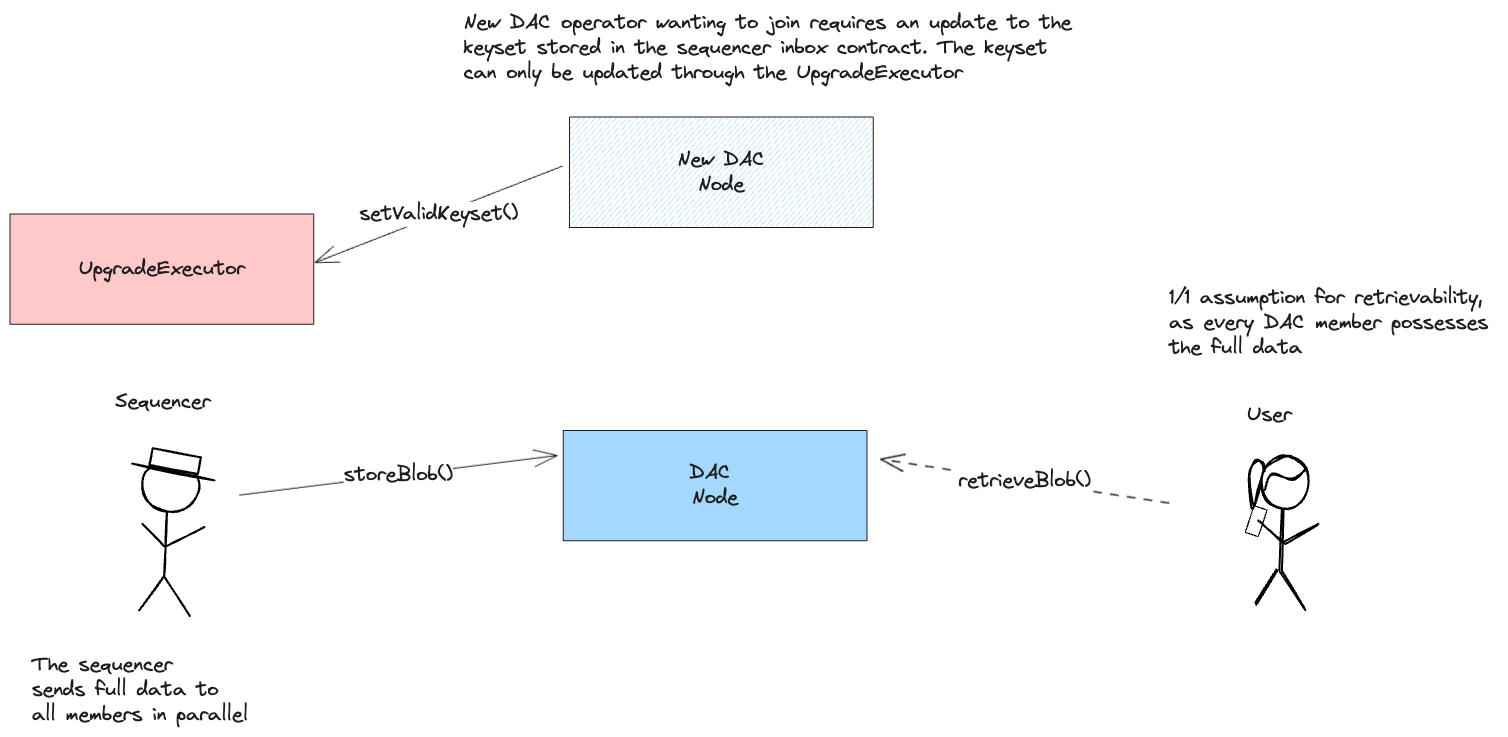
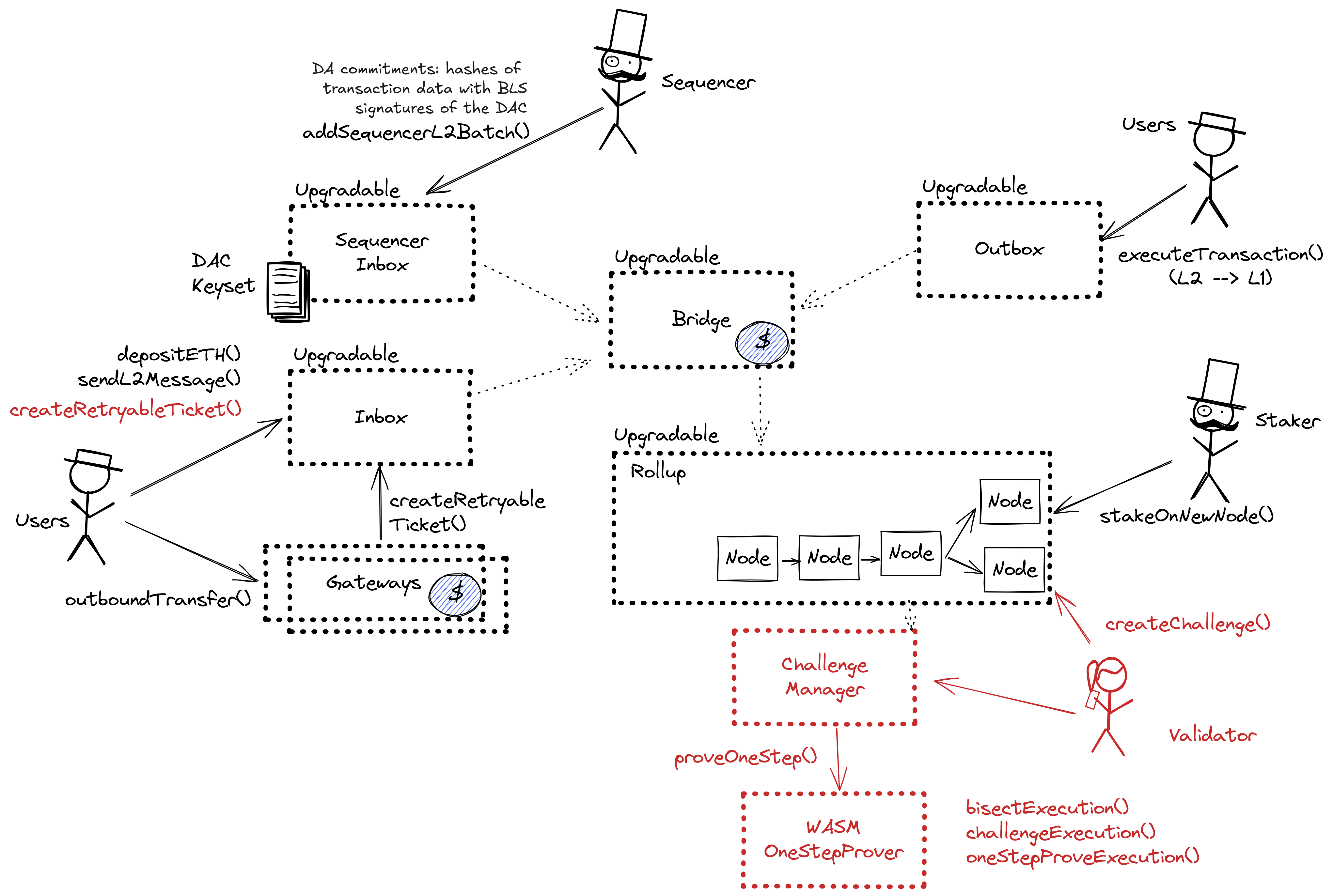
The DAC uses a data availability solution built on the AnyTrust protocol. It is composed of the following components:
- Sequencer Inbox: Main entry point for the Sequencer submitting transaction batches.
- Data Availability Committee (DAC): A group of members responsible for storing and providing data on demand.
- Data Availability Certificate (DACert): A commitment ensuring that data blobs are available without needing full data posting on the L1 chain.
Committee members run servers that support APIs for storing and retrieving data blobs. The Sequencer API allows the rollup Sequencer to submit data blobs for storage, while the REST API enables anyone to fetch data by hash. When the Sequencer produces a data batch, it sends the batch along with an expiration time to Committee members, who store it and sign it. Once enough signatures are collected, the Sequencer aggregates them into a valid DACert and posts it to the L1 chain inbox. If the Sequencer fails to collect enough signatures, it falls back to posting the full data to the L1 chain as calldata.
A DACert includes a hash of the data block, an expiration time, and proof that the required threshold of Committee members have signed off on the data. The proof consists of a hash of the Keyset used in signing, a bitmap indicating which members signed, and a BLS aggregated signature. L2 nodes reading from the sequencer inbox verify the certificate’s validity by checking the number of signers, the aggregated signature, and that the expiration time is at least two weeks ahead of the L2 timestamp. If the DACert is valid, it provides a proof that the corresponding data is available from honest committee members.
DA Bridge Architecture
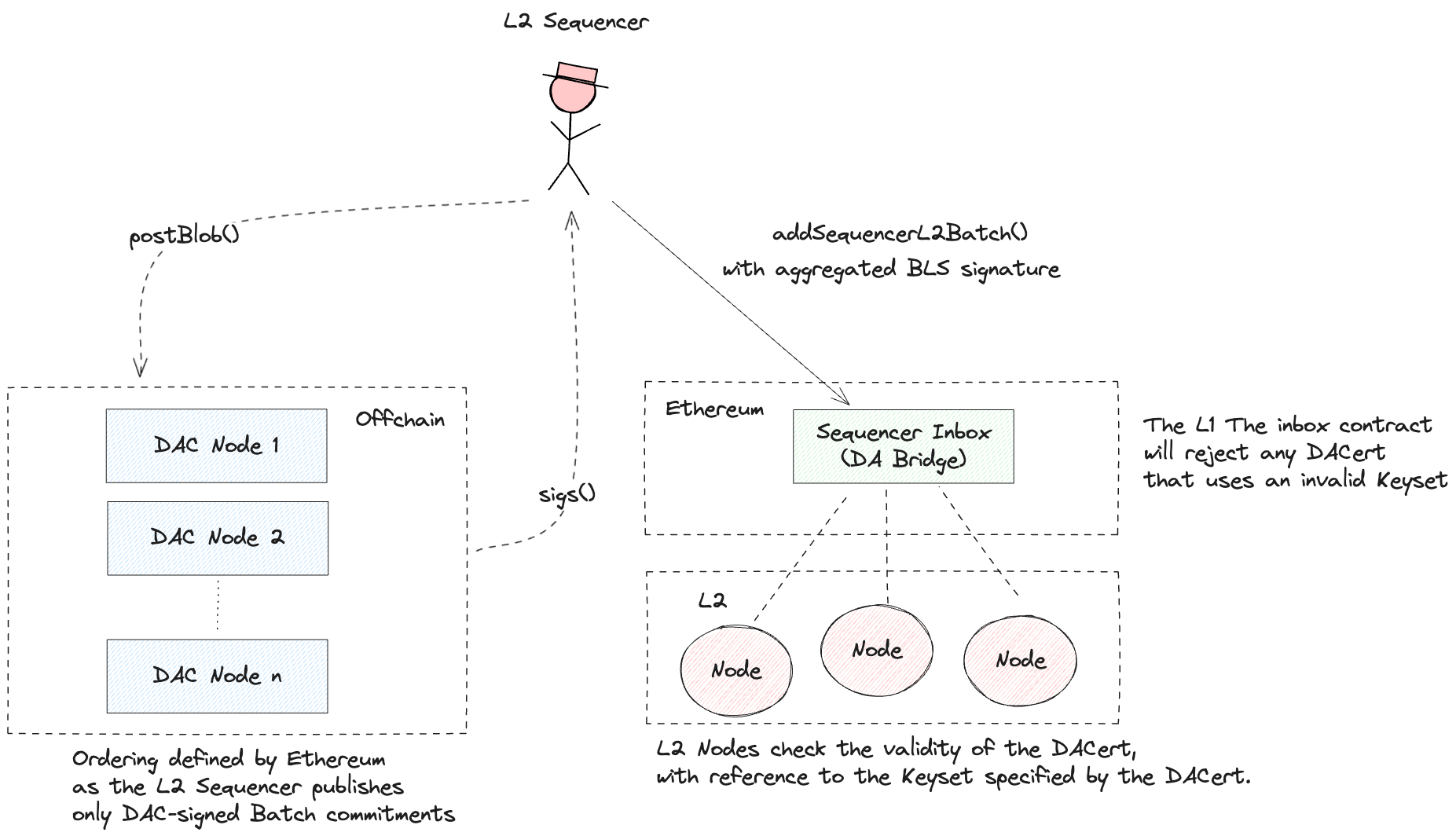
The DA commitments are posted to the destination chain through the sequencer inbox, using the inbox as a DA bridge. The DA commitment consists of Data Availability Certificate (DACert), including a hash of the data block, an expiration time, and a proof that the required threshold of Committee members have signed off on the data. The sequencer distributes the data and collects signatures from Committee members offchain. Only the DACert is posted by the sequencer to the destination chain inbox (the DA bridge), achieving destination chain transaction ordering finality in a single onchain transaction.
Funds can be lost if a malicious committee attests to an invalid data availability certificate.
Funds can be lost if the bridge contract or its dependencies receive a malicious code upgrade. There is no delay on code upgrades.
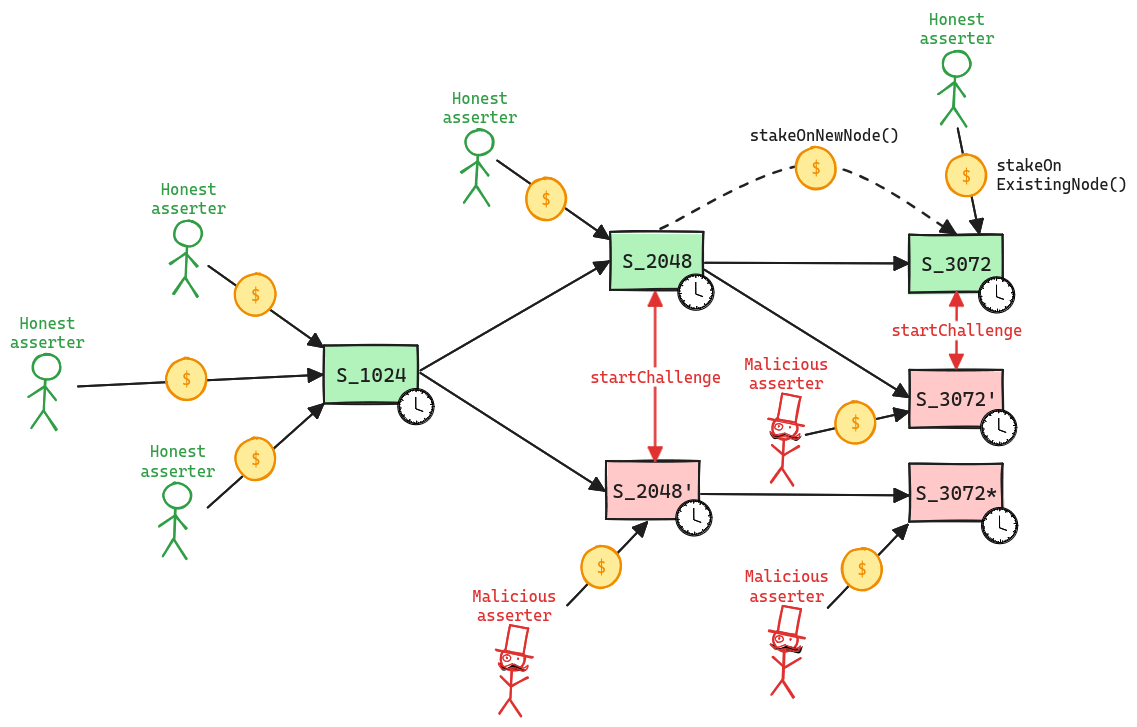
Updates to the system state can be proposed and challenged by a set of whitelisted validators. If a state root passes the challenge period, it is optimistically considered correct and made actionable for withdrawals.
Whitelisted validators propose state roots as children of a previous state root. A state root can have multiple conflicting children. This structure forms a graph, and therefore, in the contracts, state roots are referred to as nodes. Each proposal requires a stake, currently set to 0.1 ETH, that can be slashed if the proposal is proven incorrect via a fraud proof. Stakes can be moved from one node to one of its children, either by calling stakeOnExistingNode or stakeOnNewNode. New nodes cannot be created faster than the minimum assertion period by the same validator, currently set to 15m. The oldest unconfirmed node can be confirmed if the challenge period has passed and there are no siblings, and rejected if the parent is not a confirmed node or if the challenge period has passed and no one is staked on it.
Funds can be stolen if none of the whitelisted verifiers checks the published state. Fraud proofs assume at least one honest and able validator (CRITICAL).
A challenge can be started between two siblings, i.e. two different state roots that share the same parent, by calling the startChallenge function. Validators cannot be in more than one challenge at the same time, meaning that the protocol operates with partial concurrency. Since each challenge lasts 6d 8h, this implies that the protocol can be subject to delay attacks, where a malicious actor can delay withdrawals as long as they are willing to pay the cost of losing their stakes. If the protocol is delayed attacked, the new stake requirement increases exponentially for each challenge period of delay. Challenges are played via a bisection game, where asserter and challenger play together to find the first instruction of disagreement. Such instruction is then executed onchain in the WASM OneStepProver contract to determine the winner, who then gets half of the stake of the loser. As said before, a state root is rejected only when no one left is staked on it. The protocol does not enforces valid bisections, meaning that actors can propose correct initial claim and then provide incorrect midpoints.







Past upgrades
The metrics include upgrades on the currently used proxy contracts. Historical proxy contracts and changes of such are not included.
2026 June 29, 15:23 UTC1changeCaldera Multisig 3 (shared with capx, form, oevnetwork, sxt): member rotated.
Caldera Multisig 3 (shared with capx, form, oevnetwork, sxt): member rotated.
| contract Caldera Multisig 3 (eth:0x2bf43034b9559643e986A2fE3cE015a18247b904) [GnosisSafe] { | |
| +++ description: None | |
| values.$members.2: | |
| - | "eth:0xEC114946E7213d113c9B9481028271B5E9e09371" |
| + | "eth:0xFcB26a1DbFafF84b91f1b7D9026DA63007b88D3c" |
| } | |
2026 June 05, 10:08 UTC23changesChanges in EspressoTEEVerifier (high-level gateway): https://disco.l2beat.com/diff/eth:0xcC758349CBd99bAA7fAD0558634dAaB176c777D0/eth:0x51835Bbc68679Dd236cC7ed333d1F52a181975e0. Summary: - Removed Intel SGX TEE support (only Nitro TEE attestations now) - Migrated to upgradeable TEE verifier - Added some admin / owner functions: setNitroEnclaveVerifier , deleteEnclaveHashes , setEnclaveHash , setEspressoNitroTEEVerifier Changes in EspressoNitroTEEVerifier : https://disco.l2beat.com/diff/eth:0x9E490ce0203d191Cae0ABF5614D561cC6fdc771f/eth:0x4e98A1a038831B7D756ea9214508C4b34f4e4D3a. Summary: - Removed explicit owner address, now this role is taken by EspressoTEEVerifier contract. - Refactored, e.g. added TEEHelper .
Changes in EspressoTEEVerifier (high-level gateway): https://disco.l2beat.com/diff/eth:0xcC758349CBd99bAA7fAD0558634dAaB176c777D0/eth:0x51835Bbc68679Dd236cC7ed333d1F52a181975e0. Summary:
- Removed Intel SGX TEE support (only Nitro TEE attestations now)
- Migrated to upgradeable TEE verifier
- Added some admin / owner functions:
setNitroEnclaveVerifier,deleteEnclaveHashes,setEnclaveHash,setEspressoNitroTEEVerifier
Changes in EspressoNitroTEEVerifier: https://disco.l2beat.com/diff/eth:0x9E490ce0203d191Cae0ABF5614D561cC6fdc771f/eth:0x4e98A1a038831B7D756ea9214508C4b34f4e4D3a. Summary:
- Removed explicit owner address, now this role is taken by
EspressoTEEVerifiercontract. - Refactored, e.g. added
TEEHelper.
| - | Status: DELETED |
| contract NitroEnclaveVerifier (eth:0x0d1AD56885440A92799dC766D65B5C8377c60A35) [espresso/Sequencing/NitroEnclaveVerifier] | |
| +++ description: ZK-backed verifier for AWS Nitro enclave attestations. Verifies ZK proofs (RiscZero, Succinct SP1 or Pico) that attest AWS Nitro cert chain validation was executed correctly off-chain. | |
| - | Status: DELETED |
| contract SP1Verifier (eth:0x294a1Ee119C4B2510530572481A6a50892A9ae9f) [succinct/SP1Verifier] | |
| +++ description: Verifier contract for SP1 proofs (v5.0.0). | |
| contract Safe (eth:0x6Dc61D9E366697979f69D89a154f2F8cd2F11dA5) [GnosisSafe] { | |
| +++ description: None | |
| receivedPermissions.0: | |
| - | {"permission":"interact","from":"eth:0x98206aBE6bdB21765458f27F199fd813343a3C3b","description":"set the enclaveHash (hash of enclave's code and initial data) and delete all registered signers.","role":".owner"} |
| receivedPermissions.1.description: | |
| - | "set the enclaveHash (hash of enclave's code and initial data) and delete all registered signers." |
| + | "add, remove or disable supported enclave hashes." |
| receivedPermissions.1.from: | |
| - | "eth:0x9E490ce0203d191Cae0ABF5614D561cC6fdc771f" |
| + | "eth:0x5BE313094a4d35b1dB233D640176B4DD11F79b67" |
| receivedPermissions.2.description: | |
| - | "change the modular TEE verifier contracts." |
| + | "change the TEE verifier contract." |
| receivedPermissions.2.from: | |
| - | "eth:0xcC758349CBd99bAA7fAD0558634dAaB176c777D0" |
| + | "eth:0x5BE313094a4d35b1dB233D640176B4DD11F79b67" |
| } | |
| contract SequencerInbox (eth:0x8045B2aa6b823CbA8f99ef3D3404F711619d3473) [orbitstack/SequencerInbox_Espresso] { | |
| +++ description: The Espresso TEE sequencer (registered in this contract) can submit transaction batches or commitments here. | |
| values.espressoTEEVerifier: | |
| - | "eth:0xcC758349CBd99bAA7fAD0558634dAaB176c777D0" |
| + | "eth:0x5BE313094a4d35b1dB233D640176B4DD11F79b67" |
| } | |
| - | Status: DELETED |
| contract QuoteVerifier (eth:0x816ADa3B63F3c643fb04152eA32B58Db89aadd89) [espresso/Sequencing/QuoteVerifier] | |
| +++ description: The QuoteVerifier contract is used by the EspressoTEEVerifier to verify the validity of the TEE quote. It references a PCCSRouter (eth:0xe20C4d54afBbea5123728d5b7dAcD9CB3c65C39a), an access point for Intel SGX 'collateral', crucial references of which some modular contracts are unverified. | |
| - | Status: DELETED |
| contract EspressoSGXTEEVerifier (eth:0x98206aBE6bdB21765458f27F199fd813343a3C3b) [espresso/Sequencing/EspressoSGXTEEVerifier] | |
| +++ description: Verifies attestations of an Intel SGX TEE. | |
| - | Status: DELETED |
| contract EspressoNitroTEEVerifier (eth:0x9E490ce0203d191Cae0ABF5614D561cC6fdc771f) [espresso/Sequencing/EspressoNitroTEEVerifier] | |
| +++ description: Verifies attestations of an AWS Nitro TEE. | |
| Note: currently only Succinct proofs are used. | |
| - | Status: DELETED |
| contract EspressoTEEVerifier (eth:0xcC758349CBd99bAA7fAD0558634dAaB176c777D0) [espresso/Sequencing/EspressoTEEVerifier_gateway] | |
| +++ description: TEE gateway contract that can be used to 1) register signers that were generated inside a TEE and 2) verify the signatures of such signers. It supports both Intel SGX and AWS Nitro TEEs through modular contracts. | |
| EOA (eth:0xDA8E38FEf4d5cF1997061e51945775a393E4965B) { | |
| +++ description: None | |
| receivedPermissions.0.via: | |
| + | [{"address":"eth:0x546F30e936B1D01f8df1c356fa68833B9AFba99f"}] |
| receivedPermissions.0.role: | |
| - | ".owner" |
| + | "admin" |
| receivedPermissions.0.description: | |
| - | "set the root certificate, add/remove ZK verifier routes, update verifier and aggregator program IDs, and change the ZK coprocessor configuration." |
| receivedPermissions.0.from: | |
| - | "eth:0x0d1AD56885440A92799dC766D65B5C8377c60A35" |
| + | "eth:0x5BE313094a4d35b1dB233D640176B4DD11F79b67" |
| receivedPermissions.0.permission: | |
| - | "interact" |
| + | "upgrade" |
| directlyReceivedPermissions: | |
| + | [{"permission":"act","from":"eth:0x546F30e936B1D01f8df1c356fa68833B9AFba99f","role":".owner"}] |
| } | |
| + | Status: CREATED |
| contract NitroEnclaveVerifier (eth:0x1b467761E7a125381c4f654e11B397023Fc53DD8) [espresso/Sequencing/NitroEnclaveVerifier] | |
| +++ description: ZK-backed verifier for AWS Nitro enclave attestations. Verifies ZK proofs (RiscZero, Succinct SP1 or Pico) that attest AWS Nitro cert chain validation was executed correctly off-chain. | |
| + | Status: CREATED |
| contract EspressoNitroTEEVerifier (eth:0x4e98A1a038831B7D756ea9214508C4b34f4e4D3a) [espresso/Sequencing/EspressoNitroTEEVerifier_WithServices] | |
| +++ description: Verifies attestations of an AWS Nitro TEE. | |
| Note: currently only Succinct proofs are used. | |
| + | Status: CREATED |
| contract ProxyAdmin (eth:0x546F30e936B1D01f8df1c356fa68833B9AFba99f) [global/ProxyAdmin] | |
| +++ description: None | |
| + | Status: CREATED |
| contract EspressoTEEVerifier (eth:0x5BE313094a4d35b1dB233D640176B4DD11F79b67) [espresso/Sequencing/EspressoTEEVerifier_onlyNitro] | |
| +++ description: TEE gateway contract that can be used to 1) register signers that were generated inside a TEE and 2) verify the signatures of such signers. It supports AWS Nitro TEEs through modular contracts. | |
| + | Status: CREATED |
| contract SP1Verifier (eth:0xD9d5C8456a168Dd25561064F47bF116111131B1D) [succinct/SP1Verifier] | |
| +++ description: Verifier contract for SP1 proofs (v6.1.0). | |
2026 May 25, 14:30 UTC3changesCaldera Multisig 3 (shared chain-admin Safe upgrading appchain/capx/form/oevnetwork/sxt) rotated out one member and lowered threshold from 4/7 to 3/6.
Caldera Multisig 3 (shared chain-admin Safe upgrading appchain/capx/form/oevnetwork/sxt) rotated out one member and lowered threshold from 4/7 to 3/6.
| contract Caldera Multisig 3 (eth:0x2bf43034b9559643e986A2fE3cE015a18247b904) [GnosisSafe] { | |
| +++ description: None | |
| values.$members.0: | |
| - | "eth:0xbCDb12b7a5bDe037e342a6BE7fd5582b9D93C232" |
| values.$threshold: | |
| - | 4 |
| + | 3 |
| values.multisigThreshold: | |
| - | "4 of 7 (57%)" |
| + | "3 of 6 (50%)" |
| } | |
2026 May 08, 09:35 UTC2changesShared Safe ( eth:0x6Dc61D9E... ) — signer 0x5582a8A4 removed. Threshold unchanged at 2; total signers 4 → 3 (50% → 67%). Same shared multisig is referenced on apechain , molten , rari (arb1 deployments).
Shared Safe (eth:0x6Dc61D9E...) — signer 0x5582a8A4 removed. Threshold unchanged at 2; total signers 4 → 3 (50% → 67%). Same shared multisig is referenced on apechain, molten, rari (arb1 deployments).
| contract Safe (eth:0x6Dc61D9E366697979f69D89a154f2F8cd2F11dA5) [GnosisSafe] { | |
| +++ description: None | |
| values.$members.1: | |
| - | "eth:0x5582a8A4f2B04341697cEA4Cf4289a01814C26e6" |
| values.multisigThreshold: | |
| - | "2 of 4 (50%)" |
| + | "2 of 3 (67%)" |
| } | |
2026 April 17, 10:45 UTC1changeNew TEE signer (0xEb2b1CE6) registered in EspressoNitroTEEVerifier. This is a new AWS Nitro enclave-derived signer authorized to submit batches via the sequencer flow.
New TEE signer (0xEb2b1CE6) registered in EspressoNitroTEEVerifier. This is a new AWS Nitro enclave-derived signer authorized to submit batches via the sequencer flow.
| contract EspressoNitroTEEVerifier (eth:0x9E490ce0203d191Cae0ABF5614D561cC6fdc771f) { | |
| +++ description: Verifies attestations of an AWS Nitro TEE. | |
| Note: currently only Succinct proofs are used. | |
| values.registeredSigners.0: | |
| + | "eth:0xEb2b1CE6Ed647a91Ceab0D3B598f69F268f3Fc0D" |
| } | |
The system has a centralized sequencer
While forcing transaction is open to anyone the system employs a privileged sequencer that has priority for submitting transaction batches and ordering transactions.
MEV can be extracted if the operator exploits their centralized position and frontruns user transactions.
Users can force any transaction
Because the state of the system is based on transactions submitted on the underlying host chain and anyone can submit their transactions there it allows the users to circumvent censorship by interacting with the smart contract on the host chain directly. After a delay of 3d in which a Sequencer has failed to include a transaction that was directly posted to the smart contract, it can be forcefully included by anyone on the host chain, which finalizes its ordering.
Espresso TEE sequencer
Integration with Espresso sequencing. In addition to providing regular pre-confirmations, the sequencer publishes blocks to the Espresso Network. The integration expects the transaction batch poster to run inside a Trusted Execution Environment (TEE), and it is programmed to verify batch inclusion in a Espresso Network block before publishing it to the host chain. However, the confirmations provided by Espresso Network are additive, and the batch poster can skip Espresso inclusion checks should the Espresso Network be down or unavailable. To ensure the batch poster is running inside a TEE, the SequencerInbox contract on the host chain was updated so that the data posting function also includes a TEE attestation as input (a “quote” / signature) that is verified onchain by the EspressoTEEVerifier for each batch transaction. The verifier checks whether the signature originates from inside the TEE and reverts if unsuccessful.
Withdrawals can be delayed if the owner of EspressoTEEVerifier updates the contract verification values (enclave hash, signer) and it is no longer possible to verify the TEE quote.
Autonomous exit
Users can (eventually) exit the system by pushing the transaction on L1 and providing the corresponding state root. The only way to prevent such withdrawal is via an upgrade.
EVM compatible smart contracts are supported
Arbitrum One uses Nitro technology that allows running fraud proofs by executing EVM code on top of WASM.
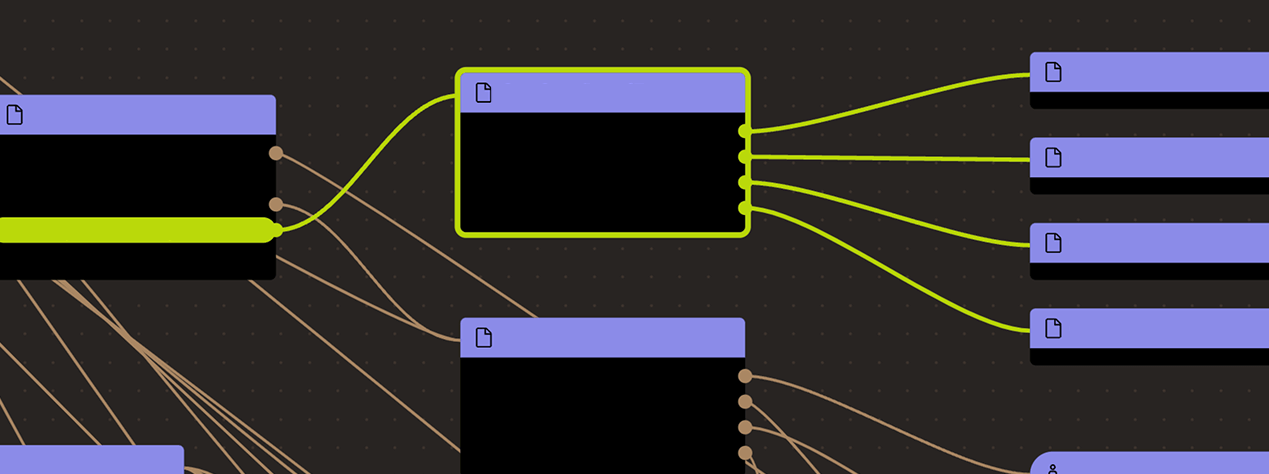
Ethereum
Actors:
A Multisig with 3/6 threshold.
- Can upgrade with no delay
- Inbox UpgradeExecutor → ProxyAdmin
- Outbox UpgradeExecutor → ProxyAdmin
- Bridge UpgradeExecutor → ProxyAdmin
- RollupEventInbox UpgradeExecutor → ProxyAdmin
- RollupProxy UpgradeExecutor
- UpgradeExecutor UpgradeExecutor → ProxyAdmin
- SequencerInbox UpgradeExecutor → ProxyAdmin
- ChallengeManager UpgradeExecutor → ProxyAdmin
- Can interact with RollupProxy
- Pause and unpause and set important roles and parameters in the system contracts: Can delegate Sequencer management to a BatchPosterManager address, manage data availability, DACs and the fastConfirmer role, set the Sequencer-only window, introduce an allowList to the bridge and whitelist Inboxes/Outboxes UpgradeExecutor
TEE gateway contract that can be used to 1) register signers that were generated inside a TEE and 2) verify the signatures of such signers. It supports AWS Nitro TEEs through modular contracts.
- Can interact with EspressoNitroTEEVerifier
- set the enclaveHash (hash of enclave’s code and initial data) and delete all registered signers
A Multisig with 2/3 threshold.
- Can interact with EspressoTEEVerifier
- add, remove or disable supported enclave hashes
- change the TEE verifier contract
- Can interact with SequencerInbox
- Add/remove batchPosters (Sequencers)
- Can submit transaction batches or commitments to the SequencerInbox contract on the host chain
- Can interact with RollupProxy
- Can propose new state roots (called nodes) and challenge state roots on the host chain
- Can upgrade with no delay
- EspressoTEEVerifier ProxyAdmin
Ethereum

Central contract for the project’s configuration like its execution logic hash (wasmModuleRoot) and addresses of the other system contracts. Entry point for Proposers creating new Rollup Nodes (state commitments) and Challengers submitting fraud proofs (In the Orbit stack, these two roles are both held by the Validators).
- Roles:
- admin: UpgradeExecutor; ultimately Caldera Multisig 3
- owner: UpgradeExecutor; ultimately Caldera Multisig 3
- validators: EOA 2
The Espresso TEE sequencer (registered in this contract) can submit transaction batches or commitments here.
- Roles:
- admin: ProxyAdmin; ultimately Caldera Multisig 3
- batchPosterManager: EOA 1
- batchPosters: EOA 1
Contract that allows challenging state roots. Can be called through the RollupProxy by Validators or the UpgradeExecutor.
- Roles:
- admin: ProxyAdmin; ultimately Caldera Multisig 3
Central contract defining the access control permissions for upgrading the system contract implementations.
- Roles:
- admin: ProxyAdmin; ultimately Caldera Multisig 3
- executors: Caldera Multisig 3
ZK-backed verifier for AWS Nitro enclave attestations. Verifies ZK proofs (RiscZero, Succinct SP1 or Pico) that attest AWS Nitro cert chain validation was executed correctly off-chain.
- Roles:
- owner: EOA 3
Helper contract sending configuration data over the bridge during the systems initialization.
- Roles:
- admin: ProxyAdmin; ultimately Caldera Multisig 3
Verifies attestations of an AWS Nitro TEE. Note: currently only Succinct proofs are used.
- Roles:
- teeVerifier: EspressoTEEVerifier
- Roles:
- owner: EOA 4
One of the modular contracts used for the last step of a fraud proof, which is simulated inside a WASM virtual machine.
This contract implements view only utilities for validators.
One of the modular contracts used for the last step of a fraud proof, which is simulated inside a WASM virtual machine.
Verifier contract for SP1 proofs (v6.1.0).
- Roles:
- owner: UpgradeExecutor
One of the modular contracts used for the last step of a fraud proof, which is simulated inside a WASM virtual machine.
One of the modular contracts used for the last step of a fraud proof, which is simulated inside a WASM virtual machine.
One of the modular contracts used for the last step of a fraud proof, which is simulated inside a WASM virtual machine.
The current deployment carries some associated risks:
Funds can be stolen if a contract receives a malicious code upgrade. There is no delay on code upgrades (CRITICAL).