Search
Search for projects and tokens by name or address
 DeGate Legacy
DeGate Legacy
This project is in shutdown mode and no longer active.
Badges
About
DeGate Legacy is a shut down deployment of DeGate, an app-specific ZK Rollup that enables a trustless, fast and low-fee decentralized order book exchange, helping users to trade easy and sleep easy. DeGate smart contracts are forked from Loopring V3.
Tokens breakdown
Badges
About
DeGate Legacy is a shut down deployment of DeGate, an app-specific ZK Rollup that enables a trustless, fast and low-fee decentralized order book exchange, helping users to trade easy and sleep easy. DeGate smart contracts are forked from Loopring V3.
The section shows the operating costs that L2s pay to Ethereum.
DeGate DEX Launches Mainnet Beta
2023 May 3rd
DeGate launches mainnet beta with a deposit cap and a program to recover eventual user losses.
Users can force the sequencerA party responsible for ordering and executing transactions on the rollup. The sequencer verifies transactions, compresses the data into a block, and submits the data related to it to enable state reconstruction to Ethereum L1 as a single transaction. The data can be either transaction data or state diffs. to include a withdrawal transaction by submitting a request through L1Layer 1 (L1) is a blockchain that is self-reliant on its validator set for its security and consensus properties. Ethereum is an example of a layer 1. Blockchains started receiving the moniker of layer 1 once layer 2 became a meaningful area of development. with a 0.01 ETH fee. If the sequencer is down for more than 15d, users can use the exit hatch to withdraw their funds. The sequencer can censor individual deposits, but in such case after 15d users can get their funds back.
SNARKs are succinct zero knowledge proofs that ensure state correctness, but require trusted setupGeneration of a piece of data that must then be used for some cryptographic protocol to run. Generating this data requires some secret information. The "trust" comes from the fact the secret must be destroyed after the ceremony, otherwise cryptographic properties of the protocol could be broken. Once the data is generated, and the secrets are forgotten, no further participation from the creators of the ceremony is required. There are two types of trusted setups for SNARKs: (i) trusted setup per circuit where it is generated from scratch for each circuit, (ii) trusted universal setup per proving system where it can be used for several circuits..
All of the data needed for proof construction is published on Ethereum L1Layer 1 (L1) is a blockchain that is self-reliant on its validator set for its security and consensus properties. Ethereum is an example of a layer 1. Blockchains started receiving the moniker of layer 1 once layer 2 became a meaningful area of development..
Users can exit funds at any time because contracts are not upgradeable.
Users are able to trustlessly exit by submitting a Merkle proof of funds.
All data required for proofs is published onchain
All the data that is used to construct the system state is published onchain in the form of cheap calldata. This ensures that it will always be available when needed.
 Ethereum
No compression is used.
The system does not begin with a genesis state; instead, it initiates from a zero state, as referenced in CreateEmptyState.
Each update to the system state must be accompanied by a ZK proof that ensures that the new state was derived by correctly applying a series of valid user transactions to the previous state. These proofs are then verified on Ethereum by a smart contract.
2024 January 05, 07:55 UTC6changesDiscovery rerun on the same block number with only config-related changes.
Discovery rerun on the same block number with only config-related changes.
New and verified contracts
| + | Status: CREATED |
| contract ExchangeAdmins (eth:0x2375BBB012C378a0df56da7B947067a76372Ec0A) | |
| +++ description: None | |
| + | Status: CREATED |
| contract ExchangeBalances (eth:0x3F93f7CD35E715476bba0DbAA99c9c5D1cb10736) | |
| +++ description: None | |
| + | Status: CREATED |
| contract ExchangeTokens (eth:0x52C0Bc9fa4481CA8d43a74B4Add792B2E15367C8) | |
| +++ description: None | |
| + | Status: CREATED |
| contract ExchangeBlocks (eth:0x615B953baD4Cc5E1232976Cd0205Fa53D279b3De) | |
| +++ description: None | |
| + | Status: CREATED |
| contract ExchangeWithdrawals (eth:0x6a4690aE65D020A61c99449a11bc02934f081b97) | |
| +++ description: None | |
| + | Status: CREATED |
| contract ExchangeGenesis (eth:0xF9c1F624B13ffd90aF9Da0f83d233808cAcab937) | |
| +++ description: None | |
2025 July 14, 12:44 UTC7changesDiscovery rerun on the same block number with only config-related changes.
Discovery rerun on the same block number with only config-related changes.
New and verified contracts
| + | Status: CREATED |
| contract BlockVerifier (0x1c602313cDDC68C5789aCb7df0C92a93B0E04C9e) | |
| +++ description: None | |
| + | Status: CREATED |
| contract LoopringOwner (0x2028834B2c0A36A918c10937EeA71BE4f932da52) | |
| +++ description: None | |
| + | Status: CREATED |
| contract LoopringV3 (0x4d707cae77c5E82a00BF9572A55d3ef3a4e0c458) | |
| +++ description: None | |
| + | Status: CREATED |
| contract LoopringIOExchangeOwner (0x6B937A5920726e70c5bF1d4d4E18EEeEd46FaE83) | |
| +++ description: None | |
| + | Status: CREATED |
| contract FeeVault (0x7B0d44D5b2eF3A8B168FAfdcc321FAb0D9d5d08C) | |
| +++ description: None | |
| + | Status: CREATED |
| contract DefaultDepositContract (0x814d0c1903D69EB1c7ceB8F5190B20A06892d1dA) | |
| +++ description: None | |
| + | Status: CREATED |
| contract ExchangeV3 (0xe63602a9B3DFE983187525AC985Fec4F57B24eD5) | |
| +++ description: None | |
2024 January 03, 12:15 UTC1changeIgnored following method.
Ignored following method.
| contract LoopringOwner (0x2028834B2c0A36A918c10937EeA71BE4f932da52) { | |
| values.transactionCount: | |
| - | 5 |
| + | 8 |
| } | |
2023 October 02, 13:27 UTC3changes
| contract LoopringOwner (0x2028834B2c0A36A918c10937EeA71BE4f932da52) { | |
| values.transactionCount: | |
| - | 4 |
| + | 5 |
| } | |
| contract ExchangeV3 (0xe63602a9B3DFE983187525AC985Fec4F57B24eD5) { | |
| values.isShutdown: | |
| - | false |
| + | true |
| values.shutdownTriggered[0]: | |
| + | {"timestamp":1695894359} |
| } | |
2023 September 26, 12:45 UTC1change
| contract ExchangeV3 (0xe63602a9B3DFE983187525AC985Fec4F57B24eD5) { | |
| values.shutdownTriggered: | |
| + | [] |
| } | |
The system has a centralized operator
The operatorAn operator is the entity charged with managing a rollup and progressing its state. A rollup operator can be a centralized sequencer, proposer, prover, challenger, pauser of admin that is able to perform upgrades. is the only entity that can propose blocksAn ordered list of transactions and chain-related metadata that gets bundled together and published to the L1/DA layer. Nodes execute the transactions contained within blocks to change the rollup chain’s state. Protocol rules dictate what constitutes a valid block, and invalid blocks are skipped over.. A live and trustworthy operator is vital to the health of the system.
MEV can be extracted if the operator exploits their centralized position and frontruns user transactions.
Users can force exit the system
Force exit allows the users to escape censorship by withdrawing their funds. The system allows users to force the withdrawal of funds by submitting a request directly to the contract onchain. The request must be served within a defined time period. If this does not happen, the system will halt regular operation and permit trustless withdrawal of funds.
Users can be censored if the operator refuses to include their transactions. However, there exists a mechanism to independently exit the system.
Regular exit
The user initiates the withdrawal by submitting a regular transaction on this chain. When the blockAn ordered list of transactions and chain-related metadata that gets bundled together and published to the L1/DA layer. Nodes execute the transactions contained within blocks to change the rollup chain’s state. Protocol rules dictate what constitutes a valid block, and invalid blocks are skipped over. containing that transaction is settled the funds become available for withdrawal on L1Layer 1 (L1) is a blockchain that is self-reliant on its validator set for its security and consensus properties. Ethereum is an example of a layer 1. Blockchains started receiving the moniker of layer 1 once layer 2 became a meaningful area of development.. ZK proofs are required to settle blocks. Finally the user submits an L1 transaction to claim the funds.
Forced exit
If the user experiences censorship from the operatorAn operator is the entity charged with managing a rollup and progressing its state. A rollup operator can be a centralized sequencer, proposer, prover, challenger, pauser of admin that is able to perform upgrades. with regular exit they can submit their withdrawal requests directly on L1Layer 1 (L1) is a blockchain that is self-reliant on its validator set for its security and consensus properties. Ethereum is an example of a layer 1. Blockchains started receiving the moniker of layer 1 once layer 2 became a meaningful area of development.. The system is then obliged to service this request. Once the force operation is submitted and if the request is serviced, the operation follows the flow of a regular exit.
Emergency exit
If the 15d deadline passes and the forced exit is still ignored the user can put the system into Withdrawal Mode, disallowing further state updates. In that case everybody can withdraw by submitting a merkle proof of their funds with their L1Layer 1 (L1) is a blockchain that is self-reliant on its validator set for its security and consensus properties. Ethereum is an example of a layer 1. Blockchains started receiving the moniker of layer 1 once layer 2 became a meaningful area of development. transaction.
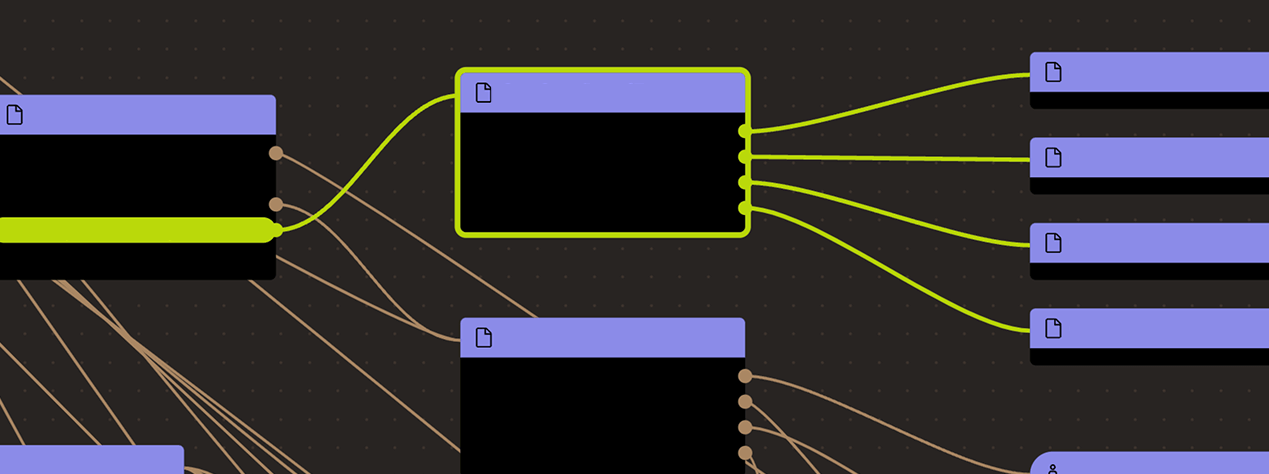
Ethereum
Actors:
This address is the owner of the following contracts: LoopringIOExchangeOwner, LoopringV3, DefaultDepositContract. Can add or remove blockAn ordered list of transactions and chain-related metadata that gets bundled together and published to the L1/DA layer. Nodes execute the transactions contained within blocks to change the rollup chain’s state. Protocol rules dictate what constitutes a valid block, and invalid blocks are skipped over. submitters. Can change the forced withdrawal fee up to 0.25 ETH. Can change a way that balance is calculated per contract during the deposit, allowing the support of non-standard tokens.
This address is the owner of the BlockVerifier contract.
Actors who can submit new blocksAn ordered list of transactions and chain-related metadata that gets bundled together and published to the L1/DA layer. Nodes execute the transactions contained within blocks to change the rollup chain’s state. Protocol rules dictate what constitutes a valid block, and invalid blocks are skipped over., updating the L2Layer 2 (L2) is a category of technical solutions aimed to scale the base layer in a trust minimized way. This category includes solutions like rollups as well as state channels and plasma. Other solutions are able to scale further, but with the introduction of additional trust assumptions, which are therefore not trust minimized. Sometimes the term Layer 2 is used to refer to include these solutions too, like validiums and optimiums, but to distinguish between trust minimized and non trust minimized solutions they are often referred to as "light" L2s, opposed to "strong" L2s like rollups. state on L1Layer 1 (L1) is a blockchain that is self-reliant on its validator set for its security and consensus properties. Ethereum is an example of a layer 1. Blockchains started receiving the moniker of layer 1 once layer 2 became a meaningful area of development..
Ethereum
Main ExchangeV3 contract.
Contract used by the ProverAn entity that generates the cryptographic proof to convince the verifier that the statement is true. In a ZK-Rollup, the prover generates the ZK (validity) proof to submit to the verifier contract. to submit exchange blocksAn ordered list of transactions and chain-related metadata that gets bundled together and published to the L1/DA layer. Nodes execute the transactions contained within blocks to change the rollup chain’s state. Protocol rules dictate what constitutes a valid block, and invalid blocks are skipped over. with zkSNARK proofs that are later processed and verified by the BlockVerifier contract.
ERC 20 token basic deposit contract. Handles user deposits and withdrawals.
All supported tokens in this escrow are included in the value secured calculation.
Contract for setting exchange fee parameters.
zkSNARK VerifierAn entity in a ZK-Rollup, often a smart contract, that verifies zero-knowledge proofs submitted by a prover. based on ethsnarks library.