Search
Search for projects by name or address
 Payy
PayyPayy
The protocol was exploited on September 24, 2026. Do not deposit funds.
Badges
About
Payy is a payments-focused ZK network for private stablecoin transfers, settled on Ethereum with aggregated validity proofs and validator signatures, while transaction data is kept offchain.
Badges
About
Payy is a payments-focused ZK network for private stablecoin transfers, settled on Ethereum with aggregated validity proofs and validator signatures, while transaction data is kept offchain.
Why is the project listed in others?
Consequence: projects without a data availability bridge fully rely on single entities (the sequencer) to honestly rely available data roots on Ethereum. A malicious sequencer can collude with the proposer to finalize an unavailable state, which can cause loss of funds.
Learn more about the recategorisation here.
The section shows the operating costs that L2s pay to Ethereum.
This section shows how "live" the project's operators are by displaying how frequently they submit transactions of the selected type. It also highlights anomalies - significant deviations from their typical schedule.
Ongoing anomaly
No State updates have been performed for the past 19d 6h (since 2026 Sep 24, 09:30 UTC). These typically occur every 2h 2m on average.
Last 30 day anomalies
All liveness anomalies detected for this project in the last 30 days, helping you review recent downtime and availability issues.
No State updates have been performed for the past 19d 6h (since 2026 Sep 24, 09:30 UTC). These typically occur every 2h 2m on average.
Critical circuit vulnerability disclosed
2026 Jun 10th
An aggregation circuitA program written for the purpose of being proven within a proving system. A circuit is a mathematical representation of the computation to be executed, arithmetic circuits and zkVM execution trace are examples of circuits. Circuits can be written in different languages, ranging from low-level to high-level. bug allowed forged burn messages, was patched by the team.
Payy Network is live on Ethereum
2026 Feb 19th
Payy launches its rollupA blockchain that inherits consensus and data availability from another blockchain called L1. Rollups enable trust minimized bridges with the base layer via proof systems, either optimistic or zero-knowledge. A rollup without a bridge, or without considering the bridge, is called a sovereign rollup. on Ethereum, migrating from its previous deployment on Polygon.
Funds can be stolen if
Funds can be lost if
Funds can be frozen if
Users can be censored if
MEV can be extracted if
There is no mechanism to have transactions be included if the sequencerA party responsible for ordering and executing transactions on the rollup. The sequencer verifies transactions, compresses the data into a block, and submits the data related to it to enable state reconstruction to Ethereum L1 as a single transaction. The data can be either transaction data or state diffs. is down or censoring.
SNARKs are succinct zero knowledge proofs that ensure state correctness, but require trusted setupGeneration of a piece of data that must then be used for some cryptographic protocol to run. Generating this data requires some secret information. The "trust" comes from the fact the secret must be destroyed after the ceremony, otherwise cryptographic properties of the protocol could be broken. Once the data is generated, and the secrets are forgotten, no further participation from the creators of the ceremony is required. There are two types of trusted setups for SNARKs: (i) trusted setup per circuit where it is generated from scratch for each circuit, (ii) trusted universal setup per proving system where it can be used for several circuits..
Proof construction and state derivation rely fully on data that is NOT published onchain.
There is no window for users to exit in case of an unwanted upgrade since contracts are instantly upgradable.
Only the whitelisted proposers can publish state rootsA cryptographic hash succinctly representing a state using a Merkle tree. on L1Layer 1 (L1) is a blockchain that is self-reliant on its validator set for its security and consensus properties. Ethereum is an example of a layer 1. Blockchains started receiving the moniker of layer 1 once layer 2 became a meaningful area of development., so in the event of failure the withdrawals are frozen.
Data is not stored on chain
Transaction data and the private note tree are kept offchain by the Payy networkA constellation of nodes (peers) that communicate via a peer-to-peer protocol, for example, in propagating transactions and blocks to other nodes.. Only state rootsA cryptographic hash succinctly representing a state using a Merkle tree. and public deposit (mint) and withdrawal (burn) messages are posted to Ethereum with each state updateA mechanism that allows to update the claimed state of a project. It usually involves verifying a state transition proof, but it can also be done in a trusted manner by a permissioned actor.. Although each update includes a data commitment hashA fixed-length fingerprint of variable-size input, produced by a hash function., the onchain function intended to assert its availability on a DA layerAn infrastructure that is used to make publish data so that it's available to the public. They take the form of Data Availability Committees (DACs) or blockchains. Not to confuse with the layer responsible with ordering, since ordering and DA can be separated. (verifyCommitHash()) is an empty placeholder, so Ethereum does not verify data availabilityThe property of a rollup's data being reachable by any node retrieving the data that were rolled up and executed to reach the proposed state. Data availability (DA), specifically decoupling it from the rollup nodes themselves, is one of the preeminent factors which allows a rollup to scale securely. A rollup is faced with a decision of what to use as a DA layer to guarantee that any node can retrieve this data--permissionlessly under any circumstance. For this reason, using Ethereum for DA currently provides the strongest security guarantees. If data is stored somewhere other than a permissionless L1, then the project is not a rollup, but rather a validium or an optimium.. While Payy has announced Celestia as its DA layer, the commitment format posted onchain cannot be linked to any Celestia blobThe data that a rollup publishes to its L1/data availability (DA) layer. They consist of the L2 transactions that are rolled up, along with some metadata. Blobs are introduced as a new transaction type within Ethereum with EIP-4844, and has rollup scaling specifically in mind. Blobs persist on Ethereum’s Beacon Chain ephemerally., and no trace of Payy data on Celestia could be identified.
Funds can be lost if the external data becomes unavailable (CRITICAL).
Each state updateA mechanism that allows to update the claimed state of a project. It usually involves verifying a state transition proof, but it can also be done in a trusted manner by a permissioned actor. submitted via verifyRollup() must include a ZK proof that is verified by the registered verifierAn entity in a ZK-Rollup, often a smart contract, that verifies zero-knowledge proofs submitted by a prover. contract, and signatures from more than 2/3 of the current validatorIn the context of L2s, a Validator is an actor that validates the correctness of state transitions. For optimistic rollups this corresponds to challengers, and for ZK rollups this corresponds to the onchain verifier set. The proof attests to the correct state transition of the private note tree, and public deposit (mint) and withdrawal (burn) messages are checked against the public inputs.
Payy transactions are proven with Noir circuits: individual UTXO transaction proofs are recursively aggregated (utxo → agg_utxo → agg_agg → agg_final) into a single proof per state updateA mechanism that allows to update the claimed state of a project. It usually involves verifying a state transition proof, but it can also be done in a trusted manner by a permissioned actor.. The circuits are published in the payy repository. The final proof is verified onchain by a Barretenberg-generated UltraHonk verifierAn entity in a ZK-Rollup, often a smart contract, that verifies zero-knowledge proofs submitted by a prover..
The RollupA blockchain that inherits consensus and data availability from another blockchain called L1. Rollups enable trust minimized bridges with the base layer via proof systems, either optimistic or zero-knowledge. A rollup without a bridge, or without considering the bridge, is called a sovereign rollup. contract maps verification key hashes to verifierAn entity in a ZK-Rollup, often a smart contract, that verifies zero-knowledge proofs submitted by a prover. contracts. Each state updateA mechanism that allows to update the claimed state of a project. It usually involves verifying a state transition proof, but it can also be done in a trusted manner by a permissioned actor. references one of the registered keys. The owner can add, replace and remove verifiers at any time without delay.
In addition to the validity proofThe output of a cryptographic proving system attesting to correct computation. ZK-Rollups use succinct validity proofs (also called zero-knowledge proofs) to prove a batch of rollup transactions and blocks were properly executed. Validity proofs are submitted to a verifier, such as an Ethereum smart contract, which accepts them if properly constructed., each state updateA mechanism that allows to update the claimed state of a project. It usually involves verifying a state transition proof, but it can also be done in a trusted manner by a permissioned actor. requires signatures from more than 2/3 of the current validatorIn the context of L2s, a Validator is an actor that validates the correctness of state transitions. For optimistic rollups this corresponds to challengers, and for ZK rollups this corresponds to the onchain verifier set, which reflects finalization by the Solid BFT consensusAn agreement on the latest and correct state of a blockchain. Unlike L1 blockchains which coordinate participating nodes with consensus rules, rollups rely on L1s for reaching consensus by checking the state of the rollup smart contract deployed thereon. of the Payy networkA constellation of nodes (peers) that communicate via a peer-to-peer protocol, for example, in propagating transactions and blocks to other nodes.. The current validator set registered onchain consists of a single address, making the effective threshold 1-of-1.

All privileged functions are ultimately controlled by the PayyMultisig (2/4). It owns the ProxyAdmin, which can instantly upgrade the RollupA blockchain that inherits consensus and data availability from another blockchain called L1. Rollups enable trust minimized bridges with the base layer via proof systems, either optimistic or zero-knowledge. A rollup without a bridge, or without considering the bridge, is called a sovereign rollup. proxy, and it is the owner of the Rollup contract, allowing it to manage provers, validatorsIn the context of L2s, a Validator is an actor that validates the correctness of state transitions. For optimistic rollups this corresponds to challengers, and for ZK rollups this corresponds to the onchain verifier, ZK verifiers, supported tokens and burn substitutors, and to directly overwrite the state rootA cryptographic hash succinctly representing a state using a Merkle tree. via setRoot(). There is no timelock or exit windowThe amount of time that users have to exit a system before an unwanted upgrade. It takes into account upgrade delays, forced transaction delays and other time factors. To be considered Stage 1, a rollup needs to have an exit window of at least 7d if upgrades are initiated by a permissioned actor less decentralized than a Security Council. For Stage 2, a rollup needs at least 30d in all cases outside of onchain provable bugs. on any of these actions.
Past upgrades
The metrics include upgrades on the currently used proxy contracts. Historical proxy contracts and changes of such are not included.
2026 August 25, 10:47 UTC4changesDiscovery rerun on the same block number with only config-related changes.
Discovery rerun on the same block number with only config-related changes.
Initial discovery
| + | Status: CREATED |
| contract HonkVerifier (eth:0x14DACD534ddc676601B27f41Eb541a7951524a2F) [payy/HonkVerifier] | |
| +++ description: UltraHonk proof verifier generated with Aztec's Barretenberg from Payy's final aggregation Noir circuit. It verifies the aggregated validity proof of each state update submitted to the Rollup contract. | |
| + | Status: CREATED |
| contract PayyMultisig (eth:0x230Dfb03F078B0d5E705F4624fCC915f3126B40f) [GnosisSafe] | |
| +++ description: None | |
| + | Status: CREATED |
| contract RollupV1 (eth:0x367C1eAF14AA06b78ce76bd0243297de79d85270) [payy/Rollup] | |
| +++ description: Main contract of the Payy ZK rollup. It stores the state root, escrows USDC backing the notes on the rollup, processes deposits (mints) and withdrawals (burns), and accepts state updates that must include an aggregated ZK proof and signatures from more than 2/3 of the current validator set. | |
| + | Status: CREATED |
| contract ProxyAdmin (eth:0xfE455baCAF1968F1Ae6a322b8Ffbe56840e2f590) [global/ProxyAdmin] | |
| +++ description: None | |
The system has a centralized operator
The operatorAn operator is the entity charged with managing a rollup and progressing its state. A rollup operator can be a centralized sequencer, proposer, prover, challenger, pauser of admin that is able to perform upgrades. is the only entity that can propose blocksAn ordered list of transactions and chain-related metadata that gets bundled together and published to the L1/DA layer. Nodes execute the transactions contained within blocks to change the rollup chain’s state. Protocol rules dictate what constitutes a valid block, and invalid blocks are skipped over.. A live and trustworthy operator is vital to the health of the system. Payy blocks are produced by validatorsIn the context of L2s, a Validator is an actor that validates the correctness of state transitions. For optimistic rollups this corresponds to challengers, and for ZK rollups this corresponds to the onchain verifier running the Solid BFT consensusAn agreement on the latest and correct state of a blockchain. Unlike L1 blockchains which coordinate participating nodes with consensus rules, rollups rely on L1s for reaching consensus by checking the state of the rollup smart contract deployed thereon. protocol, and state updates are settled on Ethereum by a whitelisted proverAn entity that generates the cryptographic proof to convince the verifier that the statement is true. In a ZK-Rollup, the prover generates the ZK (validity) proof to submit to the verifier contract.. Onchain, the current validator set consists of a single address, and a single prover address has been whitelisted since initialization.
MEV can be extracted if the operator exploits their centralized position and frontruns user transactions.
Users can't force any transaction
There is no general mechanism to force the sequencerA party responsible for ordering and executing transactions on the rollup. The sequencer verifies transactions, compresses the data into a block, and submits the data related to it to enable state reconstruction to Ethereum L1 as a single transaction. The data can be either transaction data or state diffs. to include the transaction. Deposits (mints) can be made permissionlessly on Ethereum, but they only become spendable once the Payy networkA constellation of nodes (peers) that communicate via a peer-to-peer protocol, for example, in propagating transactions and blocks to other nodes. includes them in a proven state updateA mechanism that allows to update the claimed state of a project. It usually involves verifying a state transition proof, but it can also be done in a trusted manner by a permissioned actor..
Users can be censored if the operator refuses to include their transactions.
Regular exit
Users can withdraw by burning notes on the Payy networkA constellation of nodes (peers) that communicate via a peer-to-peer protocol, for example, in propagating transactions and blocks to other nodes.. The burn is included as a public message in the next proven state updateA mechanism that allows to update the claimed state of a project. It usually involves verifying a state transition proof, but it can also be done in a trusted manner by a permissioned actor., upon which the RollupA blockchain that inherits consensus and data availability from another blockchain called L1. Rollups enable trust minimized bridges with the base layer via proof systems, either optimistic or zero-knowledge. A rollup without a bridge, or without considering the bridge, is called a sovereign rollup. contract transfers the escrowed tokens to the specified Ethereum address. Whitelisted burn substitutors can front withdrawals from their own funds before settlementThe mechanism with which the execution of rollup blocks and the resultant state is verified and possible disputes are resolved. In the context of rollups or other modular blockchains, it often refers to the proof system used--validity (ZK) or fraud proofs, or a combination thereof. Sometimes it will refer to this mechanism along with where the mechanism's outputs are ultimately published and verified, as in Ethereum being a settlement layer by verifying the proofs and allowing for withdrawals. and are refunded when the original burn is processed. There is no mechanism for users to exit independently of the operators.
Funds can be frozen if the operators fail to include withdrawals in state updates, as there is no forced exit mechanism.
Confidential notes over a public spend graph
Funds on Payy are represented as UTXO-like notes, and the chain state is a tree of note commitments. Each transaction proof hides the note contents (owner address, value, asset and entropy) but publishes the commitments of the two notes it consumes and the two it creates, and spending removes the input commitment from the tree. The deployed circuits do not use nullifiers, so anyone with Payy blockAn ordered list of transactions and chain-related metadata that gets bundled together and published to the L1/DA layer. Nodes execute the transactions contained within blocks to change the rollup chain’s state. Protocol rules dictate what constitutes a valid block, and invalid blocks are skipped over. data (served by the public nodeA software client that participates in the network. RPC and the explorer) can follow which commitments were spent into which, i.e. the transaction graph is public while its contents are not. Deposits to and withdrawals from the Ethereum escrow are public, and a withdrawal reveals asset, amount and Ethereum recipient onchain together with a burn hashA fixed-length fingerprint of variable-size input, produced by a hash function. that equals the first consumed note commitment, which anchors the withdrawal to a specific node in that graph.
Owner can overwrite the state root
The RollupA blockchain that inherits consensus and data availability from another blockchain called L1. Rollups enable trust minimized bridges with the base layer via proof systems, either optimistic or zero-knowledge. A rollup without a bridge, or without considering the bridge, is called a sovereign rollup. contract owner can directly overwrite the current state rootA cryptographic hash succinctly representing a state using a Merkle tree. via setRoot() without providing a validity proofThe output of a cryptographic proving system attesting to correct computation. ZK-Rollups use succinct validity proofs (also called zero-knowledge proofs) to prove a batch of rollup transactions and blocks were properly executed. Validity proofs are submitted to a verifier, such as an Ethereum smart contract, which accepts them if properly constructed. or validatorIn the context of L2s, a Validator is an actor that validates the correctness of state transitions. For optimistic rollups this corresponds to challengers, and for ZK rollups this corresponds to the onchain verifier signatures, and can replace the ZK verifierAn entity in a ZK-Rollup, often a smart contract, that verifies zero-knowledge proofs submitted by a prover. contracts referenced by state updates.
Funds can be stolen if the owner overwrites the state root or registers a malicious verifier.
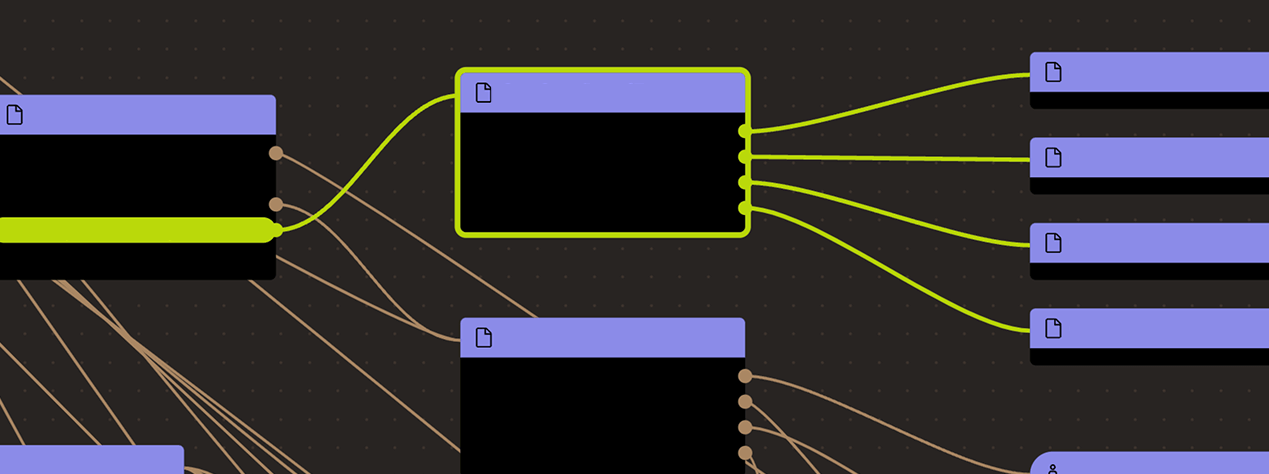
Ethereum
Actors:
A Multisig with 2/4 threshold.
- Can upgrade with no delay
- RollupV1 ProxyAdmin
- Can interact with RollupV1
- can manage provers, validatorsIn the context of L2s, a Validator is an actor that validates the correctness of state transitions. For optimistic rollups this corresponds to challengers, and for ZK rollups this corresponds to the onchain verifier, ZK verifiers, supported tokens and burn substitutors, and can overwrite the current state rootA cryptographic hash succinctly representing a state using a Merkle tree. via setRoot()
- Can interact with RollupV1
- can sign state updates as a validatorIn the context of L2s, a Validator is an actor that validates the correctness of state transitions. For optimistic rollups this corresponds to challengers, and for ZK rollups this corresponds to the onchain verifier. Signatures from more than 2/3 of the current validator set are required for each update
- Can interact with RollupV1
- can submit state updates (new state rootsA cryptographic hash succinctly representing a state using a Merkle tree.) via verifyRollup(), providing an aggregated ZK proof and validatorIn the context of L2s, a Validator is an actor that validates the correctness of state transitions. For optimistic rollups this corresponds to challengers, and for ZK rollups this corresponds to the onchain verifier signatures
Ethereum
UltraHonk proof verifierAn entity in a ZK-Rollup, often a smart contract, that verifies zero-knowledge proofs submitted by a prover. generated with Aztec’s Barretenberg from Payy’s final aggregation Noir circuitA program written for the purpose of being proven within a proving system. A circuit is a mathematical representation of the computation to be executed, arithmetic circuits and zkVM execution trace are examples of circuits. Circuits can be written in different languages, ranging from low-level to high-level.. It verifies the aggregated validity proofThe output of a cryptographic proving system attesting to correct computation. ZK-Rollups use succinct validity proofs (also called zero-knowledge proofs) to prove a batch of rollup transactions and blocks were properly executed. Validity proofs are submitted to a verifier, such as an Ethereum smart contract, which accepts them if properly constructed. of each state updateA mechanism that allows to update the claimed state of a project. It usually involves verifying a state transition proof, but it can also be done in a trusted manner by a permissioned actor. submitted to the RollupA blockchain that inherits consensus and data availability from another blockchain called L1. Rollups enable trust minimized bridges with the base layer via proof systems, either optimistic or zero-knowledge. A rollup without a bridge, or without considering the bridge, is called a sovereign rollup. contract.
Main contract of the Payy ZK rollupA blockchain that inherits consensus and data availability from another blockchain called L1. Rollups enable trust minimized bridges with the base layer via proof systems, either optimistic or zero-knowledge. A rollup without a bridge, or without considering the bridge, is called a sovereign rollup.. It stores the state rootA cryptographic hash succinctly representing a state using a Merkle tree., escrows USDC backing the notes on the rollup, processes deposits (mints) and withdrawals (burns), and accepts state updates that must include an aggregated ZK proof and signatures from more than 2/3 of the current validatorIn the context of L2s, a Validator is an actor that validates the correctness of state transitions. For optimistic rollups this corresponds to challengers, and for ZK rollups this corresponds to the onchain verifier set.
- Roles:
- admin: ProxyAdmin; ultimately PayyMultisig
- getValidatorSets: EOA 1
- initialProver: EOA 2
- owner: PayyMultisig
All supported tokens in this escrow are included in the value secured calculation.
- Roles:
- owner: PayyMultisig
The current deployment carries some associated risks:
Funds can be stolen if a contract receives a malicious code upgrade. There is no delay on code upgrades (CRITICAL).