Search
Search for projects by name or address
 HashKey Chain
HashKey Chain
Badges
About
HashKey Chain is a regulatory-compliant, institutional-grade OP stack Layer 2 solution bridging traditional finance and Web3. It is powered by Hong Kong's premier virtual asset ecosystem.
Badges
About
HashKey Chain is a regulatory-compliant, institutional-grade OP stack Layer 2 solution bridging traditional finance and Web3. It is powered by Hong Kong's premier virtual asset ecosystem.
Why is the project listed in others?
Consequence: projects without a proper proof system fully rely on single entities to safely update the state. A malicious proposer can finalize an invalid state, which can cause loss of funds.
Learn more about the recategorisation here.
The section shows the operating costs that L2s pay to Ethereum.
This section shows how much data the project publishes to Ethereum over time. It leaves out data posted to other data-availability (DA) layers. The project currently posts data to Ethereum.
This section shows how "live" the project's operators are by displaying how frequently they submit transactions of the selected type. It also highlights anomalies - significant deviations from their typical schedule.
Admin forces a transfer out of a user account
2026 Oct 13th
Admin swaps the Portal for 6 min to move 142,818 USDT out of a user account via a forced deposit.
Funds can be stolen if
MEV can be extracted if
In the event of a sequencerA party responsible for ordering and executing transactions on the rollup. The sequencer verifies transactions, compresses the data into a block, and submits the data related to it to enable state reconstruction to Ethereum L1 as a single transaction. The data can be either transaction data or state diffs. failure, users can force transactions to be included in the project’s chain by sending them to L1Layer 1 (L1) is a blockchain that is self-reliant on its validator set for its security and consensus properties. Ethereum is an example of a layer 1. Blockchains started receiving the moniker of layer 1 once layer 2 became a meaningful area of development.. There can be up to a 12h delay on this operation.
Fraud proofs allow actors watching the chain to prove that the state is incorrect. Interactive proofs (INT) require multiple transactions over time to resolve. Only one entity is currently allowed to propose and submit challenges, as only permissioned games are currently allowed.
All of the data needed for proof construction is published on Ethereum L1Layer 1 (L1) is a blockchain that is self-reliant on its validator set for its security and consensus properties. Ethereum is an example of a layer 1. Blockchains started receiving the moniker of layer 1 once layer 2 became a meaningful area of development..
There is no window for users to exit in case of an unwanted upgrade since contracts are instantly upgradable.
Only the whitelisted proposers can publish state rootsA cryptographic hash succinctly representing a state using a Merkle tree. on L1Layer 1 (L1) is a blockchain that is self-reliant on its validator set for its security and consensus properties. Ethereum is an example of a layer 1. Blockchains started receiving the moniker of layer 1 once layer 2 became a meaningful area of development., so in the event of failure the withdrawals are frozen.
All data required for proofs is published on chain
All the data that is used to construct the system state is published on chain in the form of cheap blobsThe data that a rollup publishes to its L1/data availability (DA) layer. They consist of the L2 transactions that are rolled up, along with some metadata. Blobs are introduced as a new transaction type within Ethereum with EIP-4844, and has rollup scaling specifically in mind. Blobs persist on Ethereum’s Beacon Chain ephemerally. or calldata. This ensures that it will be available for enough time.
- Derivation: Batch submission - OP Mainnet specs
- BatchInbox - address
- OptimismPortal2.sol - source code, depositTransaction function
EthereumThe rollupA blockchain that inherits consensus and data availability from another blockchain called L1. Rollups enable trust minimized bridges with the base layer via proof systems, either optimistic or zero-knowledge. A rollup without a bridge, or without considering the bridge, is called a sovereign rollup. nodeA software client that participates in the network. is composed of two software components: op-node, implementing consensusAn agreement on the latest and correct state of a blockchain. Unlike L1 blockchains which coordinate participating nodes with consensus rules, rollups rely on L1s for reaching consensus by checking the state of the rollup smart contract deployed thereon. related logic, and op-geth, implementing execution logic. The configuration file can be found here.
Data batches are compressed using the zlib algorithm with best compression level.
The genesis file can be found here.
The format specification of SequencerA party responsible for ordering and executing transactions on the rollup. The sequencer verifies transactions, compresses the data into a block, and submits the data related to it to enable state reconstruction to Ethereum L1 as a single transaction. The data can be either transaction data or state diffs.’s data batches can be found here.
Updates to the system state can be proposed and challenged by permissioned operators only. If a state rootA cryptographic hash succinctly representing a state using a Merkle tree. passes the challenge periodIn optimistic rollups, the window of time wherein network participants can assert that some fraud was included in a prior block. Most optimistic rollups currently specify a challenge window of 7 days. By extending the period, there is more time for participants to guard against fraud (invalid state transitions), but also more time until withdrawals gets enabled., it is optimistically considered correct and made actionable for withdrawals.
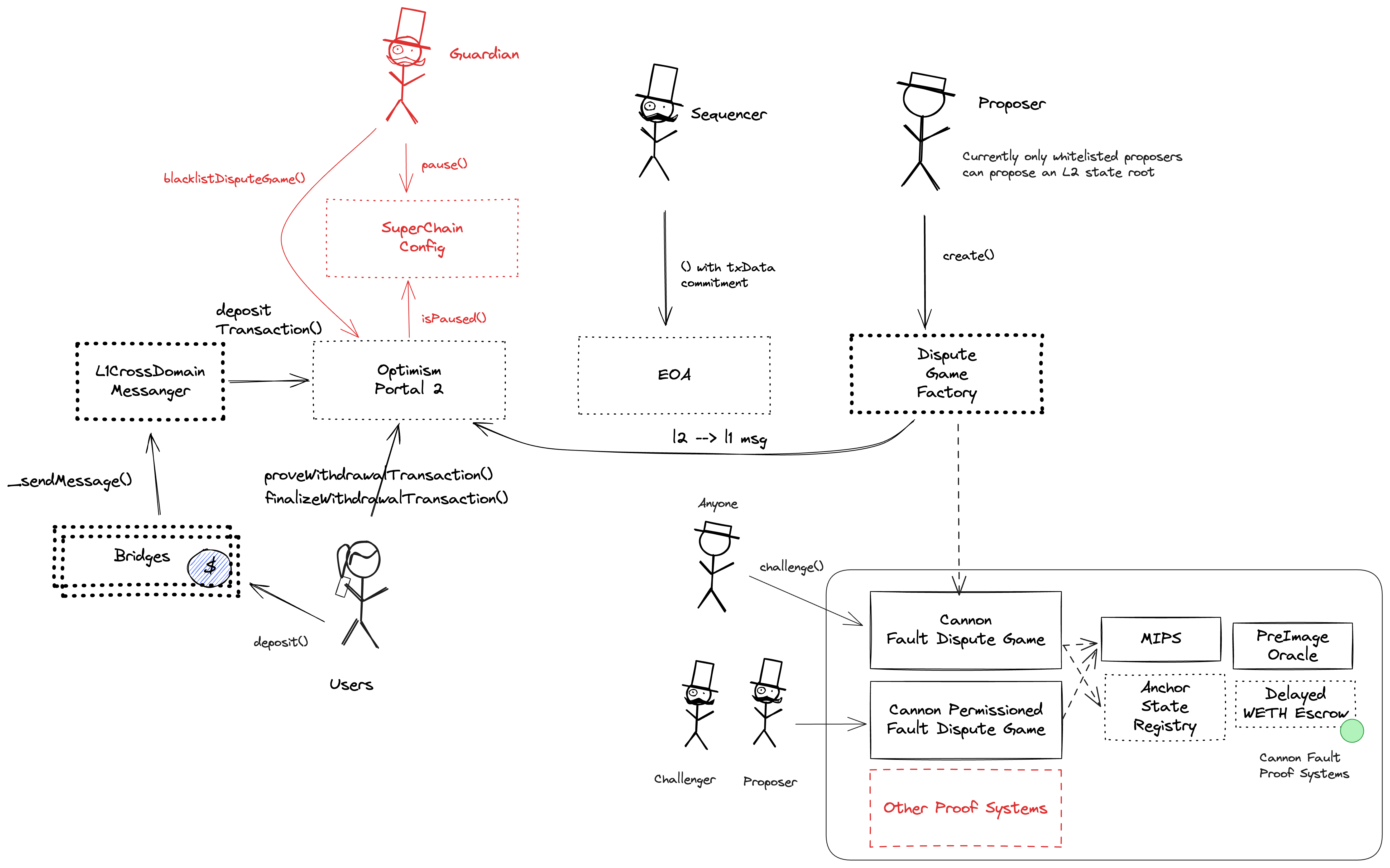
Proposers submit state rootsA cryptographic hash succinctly representing a state using a Merkle tree. as children of the latest confirmed state root (called anchor state), by calling the create function in the DisputeGameFactory. A state root can have multiple conflicting children. Each proposal requires a stake, currently set to 0.0 ETH, that can be slashed if the proposal is proven incorrect via a fraud proofAlso referred to as a fault proof, it is the construction of an assertion that fraud was perpetrated on an optimistic rollup. More concretely, that an invalid state transition took place according to the protocol rules. The submitter of a fraud proof would expect a reward from the optimistic rollup protocol for helping maintain the integrity of the system.. Stakes can be withdrawn only after the proposal has been confirmed. A state root gets confirmed if the challenge periodIn optimistic rollups, the window of time wherein network participants can assert that some fraud was included in a prior block. Most optimistic rollups currently specify a challenge window of 7 days. By extending the period, there is more time for participants to guard against fraud (invalid state transitions), but also more time until withdrawals gets enabled. has passed and it is not countered.
Funds can be stolen if no whitelisted challenger disputes an invalid state root before the challenge window expires (CRITICAL).
Challenges are opened to disprove invalid state rootsA cryptographic hash succinctly representing a state using a Merkle tree. using bisection games. Each bisection move requires a stake that increases expontentially with the depth of the bisection, with a factor of 1.09493. The maximum depth is 73, and reaching it therefore requires a cumulative stake of 0.00 ETH from depth 0. Actors can participate in any challenge by calling the defend or attack functions, depending whether they agree or disagree with the latest claim and want to move the bisection game forward. Actors that disagree with the top-level claim are called challengers, and actors that agree are called defenders. Each actor might be involved in multiple (sub-)challenges at the same time, meaning that the protocol operates with full concurrency. Challengers and defenders alternate in the bisection game, and they pass each other a clock that starts with 3d 12h. If a clock expires, the claim is considered defeated if it was countered, or it gets confirmed if uncountered. Since honest parties can inherit clocks from malicious parties that play both as challengers and defenders (see freeloader claims), an inherited clock with too little time remaining is generally extended by 3h. The extension is 6h when the next claim is immediately before split depth 30, and 1d 3h (the standard extension plus the 1d oracle challenge periodIn optimistic rollups, the window of time wherein network participants can assert that some fraud was included in a prior block. Most optimistic rollups currently specify a challenge window of 7 days. By extending the period, there is more time for participants to guard against fraud (invalid state transitions), but also more time until withdrawals gets enabled.) immediately before the last depth. Along a full-depth path, cumulative extensions can therefore add up to 10d 3h. Since unconfirmed state roots are independent of one another, users can decide to exit with a subsequent confirmed state root if the previous one is delayed. Winners get the entire losers’ stake, meaning that sybils can potentially play against each other at no cost. The final instruction found via the bisection game is then executed onchain in the MIPS one step proverAn entity that generates the cryptographic proof to convince the verifier that the statement is true. In a ZK-Rollup, the prover generates the ZK (validity) proof to submit to the verifier contract. contract who determines the winner. The protocol does not enforce valid bisections, meaning that actors can propose correct initial claims and then provide incorrect midpoints. The protocol can be subject to resource exhaustion attacks (Spearbit 5.1.3).
Program Hashes
Name | Hash | Repository | Verification | Used in | |||||||||||||||||||||||||||||||||||||||||||||||||||||||||||||||||||||||||||||||||||||||||||||||
|---|---|---|---|---|---|---|---|---|---|---|---|---|---|---|---|---|---|---|---|---|---|---|---|---|---|---|---|---|---|---|---|---|---|---|---|---|---|---|---|---|---|---|---|---|---|---|---|---|---|---|---|---|---|---|---|---|---|---|---|---|---|---|---|---|---|---|---|---|---|---|---|---|---|---|---|---|---|---|---|---|---|---|---|---|---|---|---|---|---|---|---|---|---|---|---|---|---|---|---|
Name | Hash | Repository | Verification | Used in | |||||||||||||||||||||||||||||||||||||||||||||||||||||||||||||||||||||||||||||||||||||||||||||||
|---|---|---|---|---|---|---|---|---|---|---|---|---|---|---|---|---|---|---|---|---|---|---|---|---|---|---|---|---|---|---|---|---|---|---|---|---|---|---|---|---|---|---|---|---|---|---|---|---|---|---|---|---|---|---|---|---|---|---|---|---|---|---|---|---|---|---|---|---|---|---|---|---|---|---|---|---|---|---|---|---|---|---|---|---|---|---|---|---|---|---|---|---|---|---|---|---|---|---|---|
Name | Hash | Repository | Verification | Used in | |||||||||||||||||||||||||||||||||||||||||||||||||||||||||||||||||||||||||||||||||||||||||||||||
|---|---|---|---|---|---|---|---|---|---|---|---|---|---|---|---|---|---|---|---|---|---|---|---|---|---|---|---|---|---|---|---|---|---|---|---|---|---|---|---|---|---|---|---|---|---|---|---|---|---|---|---|---|---|---|---|---|---|---|---|---|---|---|---|---|---|---|---|---|---|---|---|---|---|---|---|---|---|---|---|---|---|---|---|---|---|---|---|---|---|---|---|---|---|---|---|---|---|---|---|
0x0385...d54c |   | ||||||||||||||||||||||||||||||||||||||||||||||||||||||||||||||||||||||||||||||||||||||||||||||||||
Past upgrades
The metrics include upgrades on the currently used proxy contracts. Historical proxy contracts and changes of such are not included.
2026 October 14, 08:15 UTC3changesOptimismPortal2: implementation replaced by a custom OptimismPortalDeposit build and restored 6 min later. In between, the ProxyAdmin owner emitted one deposit with an arbitrary from , moving 142,818.28 USDT on L2 out of a third-party EOA. https://disco.l2beat.com/diff/eth:0x18A7868ECe35A45aC9138108E5b6e021aD1038d1/eth:0xcF9bEC9f2769Ecc09107C58fA5eB0199D989A606 https://etherscan.io/tx/0xcd999b6859407b249203a3ef665702cb1d2137521a068e534974d779ad035d90 https://hashkey.blockscout.com/tx/0x1704ca93fa79b4256a4d6ba9f5ea9eb72e1dab96cbb6032c65abbd5d5e2b37e7
OptimismPortal2: implementation replaced by a custom OptimismPortalDeposit build and restored 6 min later. In between, the ProxyAdmin owner emitted one deposit with an arbitrary from, moving 142,818.28 USDT on L2 out of a third-party EOA.
https://disco.l2beat.com/diff/eth:0x18A7868ECe35A45aC9138108E5b6e021aD1038d1/eth:0xcF9bEC9f2769Ecc09107C58fA5eB0199D989A606
https://etherscan.io/tx/0xcd999b6859407b249203a3ef665702cb1d2137521a068e534974d779ad035d90
https://hashkey.blockscout.com/tx/0x1704ca93fa79b4256a4d6ba9f5ea9eb72e1dab96cbb6032c65abbd5d5e2b37e7
| contract OptimismPortal2 (eth:0xe7Aa79B59CAc06F9706D896a047fEb9d3BDA8bD3) [opstack/OptimismPortal2] { | |
| +++ description: The OptimismPortal contract is the main entry point to deposit funds from L1 to L2. It also allows to prove and finalize withdrawals. It specifies which game type can be used for withdrawals, which currently is the PermissionedDisputeGame. | |
| values.$pastUpgrades.1: | |
| + | ["2026-10-13T16:34:11.000Z","0x4951a71ae7f0a5dfe038b4b32ffd0ee7344fdc7ae9c5c22665817c1593615919",["eth:0xcF9bEC9f2769Ecc09107C58fA5eB0199D989A606"]] |
| values.$pastUpgrades.2: | |
| + | ["2026-10-13T16:40:23.000Z","0x03fe54707b57aa5852cd9facce2f313553582bfe09b60654a23de34ce6798caa",["eth:0x18A7868ECe35A45aC9138108E5b6e021aD1038d1"]] |
| values.$upgradeCount: | |
| - | 1 |
| + | 3 |
| } | |
2026 September 07, 21:34 UTC1changeSystemConfig unsafeBlockSigner rotated.
SystemConfig unsafeBlockSigner rotated.
| contract SystemConfig (eth:0x43F8DeFe3E9286D152E91BB16a248808E7247198) [opstack/SystemConfig] { | |
| +++ description: Contains configuration parameters such as the Sequencer address, gas limit on this chain and the unsafe block signer address. | |
| values.unsafeBlockSigner: | |
| - | "eth:0x0dD773e949a7E53f622A3A5cC89a6C6663652638" |
| + | "eth:0x98a6bBaE1f8F7e78c96d90f1705c1fA3BD29fbfC" |
| } | |
2026 August 11, 08:22 UTCHigh severity14changesSystemConfig implementation upgraded (upgradeCount 1 - 2), adding owner-gated eip1559Denominator/Elasticity, operatorFeeScalar/Constant, daFootprintGasScalar (all 0, unconfigured) and minBaseFee (set to 500 gwei floor). l2ChainId and superchainConfig are new storage slots the source comments mark as reserved placeholders for a future OP v5 upgrade, intentionally left unset here. Owner unchanged (NXV Safe, 3-of-5). Diff: https://disco.l2beat.com/diff/eth:0xbc10fE919504D53953d27989CD5B48B9A7c08Be0/eth:0xE4577dCF1C44F04cf489AA995E01e988f461cc4A
SystemConfig implementation upgraded (upgradeCount 1 -> 2), adding owner-gated eip1559Denominator/Elasticity, operatorFeeScalar/Constant, daFootprintGasScalar (all 0, unconfigured) and minBaseFee (set to 500 gwei floor). l2ChainId and superchainConfig are new storage slots the source comments mark as reserved placeholders for a future OP v5 upgrade, intentionally left unset here. Owner unchanged (NXV Safe, 3-of-5).
Diff: https://disco.l2beat.com/diff/eth:0xbc10fE919504D53953d27989CD5B48B9A7c08Be0/eth:0xE4577dCF1C44F04cf489AA995E01e988f461cc4A
| contract SystemConfig (eth:0x43F8DeFe3E9286D152E91BB16a248808E7247198) [opstack/SystemConfig] { | |
| +++ description: Contains configuration parameters such as the Sequencer address, gas limit on this chain and the unsafe block signer address. | |
| sourceHashes.1: | |
| - | "0x5d5d38c092a6c8e1ec90659e0b12a8a490cfe629934e11c688e5e55c948a134d" |
| + | "0xf27c4a47f5f30ee0ed7d69662eb98874c98bc6957423153a1383eb983a2bbf5f" |
| values.$implementation: | |
| - | "eth:0xbc10fE919504D53953d27989CD5B48B9A7c08Be0" |
| + | "eth:0xE4577dCF1C44F04cf489AA995E01e988f461cc4A" |
| values.$pastUpgrades.1: | |
| + | ["2026-08-04T08:28:23.000Z","0x6dab15d826dc253e57c4cd55634e061e01df3d1045528e3dde13840bbddde1fd",["eth:0xE4577dCF1C44F04cf489AA995E01e988f461cc4A"]] |
| values.$upgradeCount: | |
| - | 1 |
| + | 2 |
| values.daFootprintGasScalar: | |
| + | 0 |
| +++ description: volatility param: lower denominator -> quicker fee changes on L2 | |
| values.eip1559Denominator: | |
| + | 0 |
| values.eip1559Elasticity: | |
| + | 0 |
| values.l2ChainId: | |
| + | 0 |
| values.minBaseFee: | |
| + | 500000000000 |
| values.operatorFeeConstant: | |
| + | 0 |
| values.operatorFeeScalar: | |
| + | 0 |
| values.superchainConfig: | |
| + | "eth:0x0000000000000000000000000000000000000000" |
| implementationNames.eth:0xbc10fE919504D53953d27989CD5B48B9A7c08Be0: | |
| - | "SystemConfig" |
| implementationNames.eth:0xE4577dCF1C44F04cf489AA995E01e988f461cc4A: | |
| + | "SystemConfig" |
| } | |
2026 June 23, 10:25 UTC25changesMoved some GnosisSafes to NXV multisigs (supposedly simplified version of GnosisSafe), see: nexvault.com
Moved some GnosisSafes to NXV multisigs (supposedly simplified version of GnosisSafe), see: nexvault.com
| - | Status: DELETED |
| contract Hashkey Multisig 3 (eth:0x29Fbda675Fa5a07B621C2C1a6E3F874C14F612F3) [GnosisSafe] | |
| +++ description: None | |
| contract SystemConfig (eth:0x43F8DeFe3E9286D152E91BB16a248808E7247198) [opstack/SystemConfig] { | |
| +++ description: Contains configuration parameters such as the Sequencer address, gas limit on this chain and the unsafe block signer address. | |
| values.owner: | |
| - | "eth:0x29Fbda675Fa5a07B621C2C1a6E3F874C14F612F3" |
| + | "eth:0x391832Fb1884E6772Dbd9f24cE2db35E9B20B696" |
| } | |
| contract Hashkey Multisig 1 (eth:0x441F31C4cdf772558D4EA31f3114de59aE145E7c) [GnosisSafe] { | |
| +++ description: None | |
| receivedPermissions.0: | |
| - | {"permission":"interact","from":"eth:0x679A65aD62972Ea3561F40A12e93CcA6f79F35E6","description":"set and change address mappings.","role":".owner","via":[{"address":"eth:0x7986eD289935A0F47FC434C00cDE309fE2c51f1C"}]} |
| receivedPermissions.3: | |
| - | {"permission":"upgrade","from":"eth:0x0407af506d86bFA5e401099b2fC2355590638f19","role":"admin","via":[{"address":"eth:0x7986eD289935A0F47FC434C00cDE309fE2c51f1C"}]} |
| receivedPermissions.4: | |
| - | {"permission":"upgrade","from":"eth:0x04Ec030f362CE5A0b5Fe2d4B4219f287C2EBDE50","role":"admin","via":[{"address":"eth:0x7986eD289935A0F47FC434C00cDE309fE2c51f1C"}]} |
| receivedPermissions.5: | |
| - | {"permission":"upgrade","from":"eth:0x2171E6d3B7964fA9654Ce41dA8a8fFAff2Cc70be","description":"upgrading the bridge implementation can give access to all funds escrowed therein.","role":".$admin","via":[{"address":"eth:0x7986eD289935A0F47FC434C00cDE309fE2c51f1C"}]} |
| receivedPermissions.6: | |
| - | {"permission":"upgrade","from":"eth:0x43F8DeFe3E9286D152E91BB16a248808E7247198","role":"admin","via":[{"address":"eth:0x7986eD289935A0F47FC434C00cDE309fE2c51f1C"}]} |
| receivedPermissions.7: | |
| - | {"permission":"upgrade","from":"eth:0x4deC2aA521108d78d983c0c12656c6CF8631F2ED","role":"admin","via":[{"address":"eth:0x7986eD289935A0F47FC434C00cDE309fE2c51f1C"}]} |
| receivedPermissions.8: | |
| - | {"permission":"upgrade","from":"eth:0x899F07862D3A03F70E07b7f01183934b485d2e97","role":"admin","via":[{"address":"eth:0x7986eD289935A0F47FC434C00cDE309fE2c51f1C"}]} |
| receivedPermissions.9: | |
| - | {"permission":"upgrade","from":"eth:0xBb70D595147A141e268532BFEF61A8c25054d26D","role":"admin","via":[{"address":"eth:0x7986eD289935A0F47FC434C00cDE309fE2c51f1C"}]} |
| receivedPermissions.10: | |
| - | {"permission":"upgrade","from":"eth:0xd4C83D93c6fAE3E0804B785F9Cf465BE95449D04","role":"admin","via":[{"address":"eth:0x7986eD289935A0F47FC434C00cDE309fE2c51f1C"}]} |
| receivedPermissions.11: | |
| - | {"permission":"upgrade","from":"eth:0xd9c31D15f2c649e525C2574bC025b3CAafAaf6fe","role":"admin","via":[{"address":"eth:0x7986eD289935A0F47FC434C00cDE309fE2c51f1C"}]} |
| receivedPermissions.12: | |
| - | {"permission":"upgrade","from":"eth:0xe7Aa79B59CAc06F9706D896a047fEb9d3BDA8bD3","role":"admin","via":[{"address":"eth:0x7986eD289935A0F47FC434C00cDE309fE2c51f1C"}]} |
| receivedPermissions.13: | |
| - | {"permission":"upgrade","from":"eth:0xfd1255b6c09D939E7F3896A16C32CDBCD6F8B40A","role":"admin","via":[{"address":"eth:0x7986eD289935A0F47FC434C00cDE309fE2c51f1C"}]} |
| directlyReceivedPermissions: | |
| - | [{"permission":"act","from":"eth:0x7986eD289935A0F47FC434C00cDE309fE2c51f1C","role":".owner"}] |
| } | |
| contract ProxyAdmin (eth:0x7986eD289935A0F47FC434C00cDE309fE2c51f1C) [global/ProxyAdmin] { | |
| +++ description: None | |
| values.owner: | |
| - | "eth:0x441F31C4cdf772558D4EA31f3114de59aE145E7c" |
| + | "eth:0x3228F00FbFD0e1F4c282601c489664B10932C40f" |
| } | |
| - | Status: DELETED |
| contract Hashkey Multisig 2 (eth:0xC7fCbE26c1Db751d63869F72F782a56710f6be5A) [GnosisSafe] | |
| +++ description: None | |
| contract OptimismPortal2 (eth:0xe7Aa79B59CAc06F9706D896a047fEb9d3BDA8bD3) [opstack/OptimismPortal2] { | |
| +++ description: The OptimismPortal contract is the main entry point to deposit funds from L1 to L2. It also allows to prove and finalize withdrawals. It specifies which game type can be used for withdrawals, which currently is the PermissionedDisputeGame. | |
| values.guardian: | |
| - | "eth:0xC7fCbE26c1Db751d63869F72F782a56710f6be5A" |
| + | "eth:0x6F2b20996ADAf3ae64Da901A67f659C2c48f66C9" |
| } | |
| contract SuperchainConfig (eth:0xfd1255b6c09D939E7F3896A16C32CDBCD6F8B40A) [opstack/SuperchainConfigFake] { | |
| +++ description: This is NOT the shared SuperchainConfig contract of the OP stack Superchain but rather a local fork. It manages the `PAUSED_SLOT`, a boolean value indicating whether the local chain is paused, and `GUARDIAN_SLOT`, the address of the guardian which can pause and unpause the system. | |
| values.$pastUpgrades.1: | |
| + | ["2026-05-25T05:51:23.000Z","0x3bfc8a22ff71232436c67628de837c36002264a5dfbc55b38b957f5ba471538c",["eth:0x3a6CBE32Ed9E11662362400C293485109bdF2CcC"]] |
| values.$pastUpgrades.2: | |
| + | ["2026-05-25T05:51:23.000Z","0x3bfc8a22ff71232436c67628de837c36002264a5dfbc55b38b957f5ba471538c",["eth:0x1d31a15050DBE75c6c060D6da696332a5CB943e1"]] |
| values.$upgradeCount: | |
| - | 1 |
| + | 3 |
| values.guardian: | |
| - | "eth:0xC7fCbE26c1Db751d63869F72F782a56710f6be5A" |
| + | "eth:0x6F2b20996ADAf3ae64Da901A67f659C2c48f66C9" |
| } | |
| + | Status: CREATED |
| contract NXV (eth:0x3228F00FbFD0e1F4c282601c489664B10932C40f) [NXV] | |
| +++ description: None | |
| + | Status: CREATED |
| contract NXV (eth:0x391832Fb1884E6772Dbd9f24cE2db35E9B20B696) [NXV] | |
| +++ description: None | |
| + | Status: CREATED |
| contract NXV (eth:0x6F2b20996ADAf3ae64Da901A67f659C2c48f66C9) [NXV] | |
| +++ description: None | |
2026 March 04, 12:16 UTCHigh severity5changesPermissionedDisputeGame redeployed with a new proposer address (same implementation, same version 1.3.1-beta.2, same absolutePrestate). Proposer rotated from 0xD1B3Ea8b98C86b1fc00B28096CB504d930D17A54 to 0xF660E0982b3720bc01692f9D10c647f688FD07ba. Diff (identical code) Batcher and unsafeBlockSigner addresses rotated in SystemConfig.
PermissionedDisputeGame redeployed with a new proposer address (same implementation, same version 1.3.1-beta.2, same absolutePrestate). Proposer rotated from 0xD1B3Ea8b98C86b1fc00B28096CB504d930D17A54 to 0xF660E0982b3720bc01692f9D10c647f688FD07ba. Diff (identical code)
Batcher and unsafeBlockSigner addresses rotated in SystemConfig.
| contract DisputeGameFactory (eth:0x04Ec030f362CE5A0b5Fe2d4B4219f287C2EBDE50) { | |
| +++ description: The dispute game factory allows the creation of dispute games, used to propose state roots and eventually challenge them. | |
| +++ severity: HIGH | |
| values.gameImpls.1: | |
| - | "eth:0x80243779986D4F08b7bc2888a8Ce086E0d45dF41" |
| + | "eth:0xE38135e20BA018a5542C83De258d80d6883Da8A3" |
| } | |
| contract SystemConfig (eth:0x43F8DeFe3E9286D152E91BB16a248808E7247198) { | |
| +++ description: Contains configuration parameters such as the Sequencer address, gas limit on this chain and the unsafe block signer address. | |
| values.batcherHash: | |
| - | "eth:0xFa35501cab42175918093F40C317642919F45165" |
| + | "eth:0x5e70713222FaF60c9e9fB69240D06ae6D688563A" |
| values.unsafeBlockSigner: | |
| - | "eth:0x38Eb7BDa08297a65d399FbE46F061116f6Dd0ECB" |
| + | "eth:0x0dD773e949a7E53f622A3A5cC89a6C6663652638" |
| } | |
| - | Status: DELETED |
| contract PermissionedDisputeGame (eth:0x80243779986D4F08b7bc2888a8Ce086E0d45dF41) | |
| +++ description: Same as FaultDisputeGame, but only two permissioned addresses are designated as proposer and challenger. | |
| + | Status: CREATED |
| contract PermissionedDisputeGame (eth:0xE38135e20BA018a5542C83De258d80d6883Da8A3) | |
| +++ description: Same as FaultDisputeGame, but only two permissioned addresses are designated as proposer and challenger. | |
The system has a centralized operator
The operatorAn operator is the entity charged with managing a rollup and progressing its state. A rollup operator can be a centralized sequencer, proposer, prover, challenger, pauser of admin that is able to perform upgrades. is the only entity that can propose blocksAn ordered list of transactions and chain-related metadata that gets bundled together and published to the L1/DA layer. Nodes execute the transactions contained within blocks to change the rollup chain’s state. Protocol rules dictate what constitutes a valid block, and invalid blocks are skipped over.. A live and trustworthy operator is vital to the health of the system.
MEV can be extracted if the operator exploits their centralized position and frontruns user transactions.
Users can force any transaction
Because the state of the system is based on transactions submitted on the underlying host chain and anyone can submit their transactions there it allows the users to circumvent censorship by interacting with the smart contract on the host chain directly.
Regular exits
The user initiates the withdrawal by submitting a regular transaction on this chain. When a state rootA cryptographic hash succinctly representing a state using a Merkle tree. containing such transaction is settled, the funds become available for withdrawal on L1Layer 1 (L1) is a blockchain that is self-reliant on its validator set for its security and consensus properties. Ethereum is an example of a layer 1. Blockchains started receiving the moniker of layer 1 once layer 2 became a meaningful area of development. after 3d 12h. Withdrawal inclusion can be proven before state root settlementThe mechanism with which the execution of rollup blocks and the resultant state is verified and possible disputes are resolved. In the context of rollups or other modular blockchains, it often refers to the proof system used--validity (ZK) or fraud proofs, or a combination thereof. Sometimes it will refer to this mechanism along with where the mechanism's outputs are ultimately published and verified, as in Ethereum being a settlement layer by verifying the proofs and allowing for withdrawals., but a 3d 12h period has to pass before it becomes actionable. The process of state root settlement takes a challenge periodIn optimistic rollups, the window of time wherein network participants can assert that some fraud was included in a prior block. Most optimistic rollups currently specify a challenge window of 7 days. By extending the period, there is more time for participants to guard against fraud (invalid state transitions), but also more time until withdrawals gets enabled. of at least 3d 12h to complete. Finally the user submits an L1 transaction to claim the funds. This transaction requires a merkle proof.
Forced messaging
If the user experiences censorship from the operatorAn operator is the entity charged with managing a rollup and progressing its state. A rollup operator can be a centralized sequencer, proposer, prover, challenger, pauser of admin that is able to perform upgrades. with regular L2Layer 2 (L2) is a category of technical solutions aimed to scale the base layer in a trust minimized way. This category includes solutions like rollups as well as state channels and plasma. Other solutions are able to scale further, but with the introduction of additional trust assumptions, which are therefore not trust minimized. Sometimes the term Layer 2 is used to refer to include these solutions too, like validiums and optimiums, but to distinguish between trust minimized and non trust minimized solutions they are often referred to as "light" L2s, opposed to "strong" L2s like rollups.->L1Layer 1 (L1) is a blockchain that is self-reliant on its validator set for its security and consensus properties. Ethereum is an example of a layer 1. Blockchains started receiving the moniker of layer 1 once layer 2 became a meaningful area of development. messaging they can submit their messages directly on L1. The system is then obliged to service this request or halt all messages, including forced withdrawals from L1 and regular messages initiated on L2. Once the force operation is submitted and if the request is serviced, the operation follows the flow of a regular message.
EVM compatible smart contracts are supported
OP stack chains are pursuing the EVM EquivalenceA perfect degree of compatibility; where one system or concept is indistinguishable from another in the domain being compared. In the context of rollups, it generally refers to the proximity to the EVM and to Ethereum architecture. model. No changes to smart contracts are required regardless of the language they are written in, i.e. anything deployed on L1Layer 1 (L1) is a blockchain that is self-reliant on its validator set for its security and consensus properties. Ethereum is an example of a layer 1. Blockchains started receiving the moniker of layer 1 once layer 2 became a meaningful area of development. can be deployed on L2Layer 2 (L2) is a category of technical solutions aimed to scale the base layer in a trust minimized way. This category includes solutions like rollups as well as state channels and plasma. Other solutions are able to scale further, but with the introduction of additional trust assumptions, which are therefore not trust minimized. Sometimes the term Layer 2 is used to refer to include these solutions too, like validiums and optimiums, but to distinguish between trust minimized and non trust minimized solutions they are often referred to as "light" L2s, opposed to "strong" L2s like rollups..
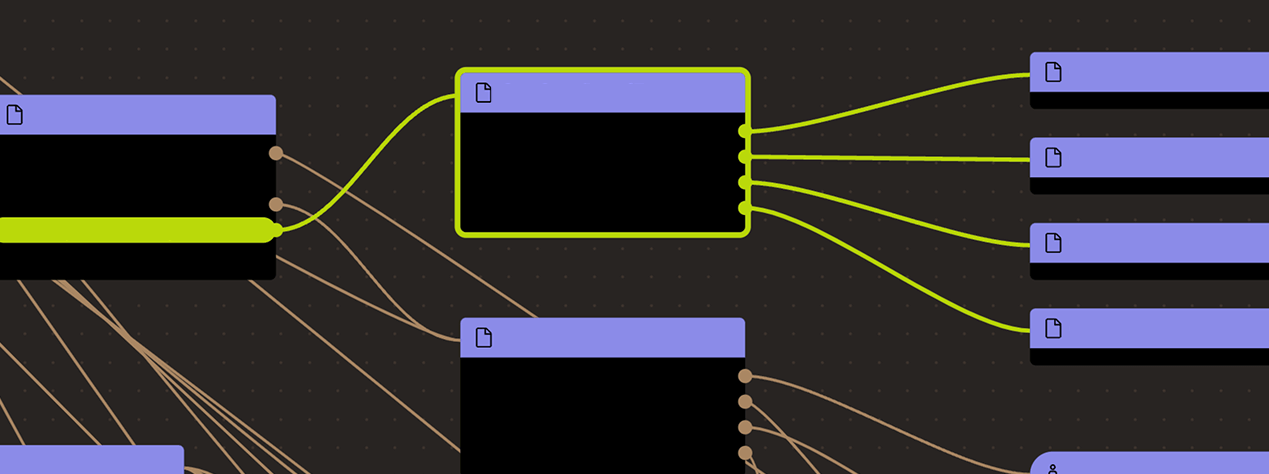
Ethereum
Actors:
A Multisig with 3/5 threshold.
- Can upgrade with no delay
- OptimismMintableERC20Factory ProxyAdmin
- DisputeGameFactory ProxyAdmin
- L1StandardBridge ProxyAdmin
- SystemConfig ProxyAdmin
- AnchorStateRegistry ProxyAdmin
- L1CrossDomainMessenger ProxyAdmin
- DelayedWETH ProxyAdmin
- L1ERC721Bridge ProxyAdmin
- DelayedWETH ProxyAdmin
- OptimismPortal2 ProxyAdmin
- SuperchainConfig ProxyAdmin
- Can interact with AddressManager
- set and change address mappings ProxyAdmin
A Multisig with 3/5 threshold.
- Can interact with SystemConfig
- it can update the preconfer address, the batch submitter (SequencerA party responsible for ordering and executing transactions on the rollup. The sequencer verifies transactions, compresses the data into a block, and submits the data related to it to enable state reconstruction to Ethereum L1 as a single transaction. The data can be either transaction data or state diffs.) address and the gasA virtual fuel used to execute smart contracts on a rollup. The EVM (or other VM within the rollup) uses an accounting mechanism to correspond the consumption of gas to the consumption of computing resources, and to limit the consumption of computing resources. configuration of the system
A Multisig with 3/5 threshold.
- Can interact with DisputeGameFactory
- set the dispute game implementation and initial bond for any game type
- Can interact with DelayedWETH
- can pull funds from the contract in case of emergency
- Can interact with DelayedWETH
- can pull funds from the contract in case of emergency
A Multisig with 3/5 threshold.
- Can interact with SuperchainConfig
- Allowed to pause withdrawals. In op stack systems with a proof systemThe infrastructure that allows projects to verify their state transitions. It is composed by onchain verifiers and offchain provers. The main two flavors are optimistic and ZK proof systems, but they can be combined in a hybrid model. In general though, if a system is able to accept state roots optimistically, even if it has a ZK component, it is considered an optimistic proof system., the Guardian can also blacklist dispute games and set the respected game type (permissioned / permissionlessAnyone willing should be able to join and leave the network at any time, without causing significant disturbance to the network or being detrimental to the party in question. No single entity should have the power to allowlist or blocklist participants.)
- Can interact with SystemConfig
- Allowed to commit transactions from the current layer to the host chain
Ethereum
The dispute game factory allows the creation of dispute games, used to propose state rootsA cryptographic hash succinctly representing a state using a Merkle tree. and eventually challenge them.
- Roles:
- admin: ProxyAdmin; ultimately NXV
- owner: Hashkey Multisig 1
Contains configuration parameters such as the SequencerA party responsible for ordering and executing transactions on the rollup. The sequencer verifies transactions, compresses the data into a block, and submits the data related to it to enable state reconstruction to Ethereum L1 as a single transaction. The data can be either transaction data or state diffs. address, gas limitThe maximum amount of gas a transaction or block may consume. on this chain and the unsafe blockAn ordered list of transactions and chain-related metadata that gets bundled together and published to the L1/DA layer. Nodes execute the transactions contained within blocks to change the rollup chain’s state. Protocol rules dictate what constitutes a valid block, and invalid blocks are skipped over. signer address.
- Roles:
- admin: ProxyAdmin; ultimately NXV
- batcherHash: EOA 1
- owner: NXV
The OptimismPortal contract is the main entry point to deposit funds from L1Layer 1 (L1) is a blockchain that is self-reliant on its validator set for its security and consensus properties. Ethereum is an example of a layer 1. Blockchains started receiving the moniker of layer 1 once layer 2 became a meaningful area of development. to L2Layer 2 (L2) is a category of technical solutions aimed to scale the base layer in a trust minimized way. This category includes solutions like rollups as well as state channels and plasma. Other solutions are able to scale further, but with the introduction of additional trust assumptions, which are therefore not trust minimized. Sometimes the term Layer 2 is used to refer to include these solutions too, like validiums and optimiums, but to distinguish between trust minimized and non trust minimized solutions they are often referred to as "light" L2s, opposed to "strong" L2s like rollups.. It also allows to prove and finalize withdrawals. It specifies which game type can be used for withdrawals, which currently is the PermissionedDisputeGame.
- Roles:
- admin: ProxyAdmin; ultimately NXV


This is NOT the shared SuperchainConfig contract of the OP stack Superchain but rather a local fork. It manages the PAUSED_SLOT, a boolean value indicating whether the local chain is paused, and GUARDIAN_SLOT, the address of the guardian which can pause and unpause the system.
- Roles:
- admin: ProxyAdmin; ultimately NXV
- guardian: NXV
The main entry point to deposit ERC20 tokens from host chain to this chain.
- Roles:
- admin: ProxyAdmin; ultimately NXV
All supported tokens in this escrow are included in the value secured calculation.
Sends messages from host chain to this chain, and relays messages back onto host chain. In the event that a message sent from host chain to this chain is rejected for exceeding this chain’s epoch gas limitThe maximum amount of gas a transaction or block may consume., it can be resubmitted via this contract’s replay function.
- Roles:
- admin: ProxyAdmin; ultimately NXV
Used to bridgeA message-passing protocol between two blockchains. At its most basic, a token bridge consists of a smart contract which can escrow funds on one side of the bridge, and instruct the release or minting of corresponding assets on the other side, but bridges could also support arbitrary messages. How these instructions are validated is a critical factor in assessing the trust assumptions of a bridge. ERC-721 tokens from host chain to this chain.
- Roles:
- admin: ProxyAdmin; ultimately NXV
A helper contract that generates OptimismMintableERC20 contracts on the networkA constellation of nodes (peers) that communicate via a peer-to-peer protocol, for example, in propagating transactions and blocks to other nodes. it’s deployed to. OptimismMintableERC20 is a standard extension of the base ERC20 token contract designed to allow the L1StandardBridge contracts to mint and burn tokens. This makes it possible to use an OptimismMintableERC20 as this chain’s representation of a token on the host chain, or vice-versa.
- Roles:
- admin: ProxyAdmin; ultimately NXV
Contains the latest confirmed state rootA cryptographic hash succinctly representing a state using a Merkle tree. that can be used as a starting point in a dispute game.
- Roles:
- admin: ProxyAdmin; ultimately NXV
The PreimageOracle contract is used to load the required data from L1Layer 1 (L1) is a blockchain that is self-reliant on its validator set for its security and consensus properties. Ethereum is an example of a layer 1. Blockchains started receiving the moniker of layer 1 once layer 2 became a meaningful area of development. for a dispute game.
The MIPS contract is used to execute the final step of the dispute game which objectively determines the winner of the dispute.
- Roles:
- owner: NXV
Contract designed to hold the bonded ETH for each game. It is designed as a wrapper around WETH to allow an owner to function as a backstop if a game would incorrectly distribute funds.
- Roles:
- admin: ProxyAdmin; ultimately NXV
- owner: Hashkey Multisig 1
Logic of the dispute game. When a state rootA cryptographic hash succinctly representing a state using a Merkle tree. is proposed, a dispute game contract is deployed. Challengers can use such contracts to challenge the proposed state root.
Contract designed to hold the bonded ETH for each game. It is designed as a wrapper around WETH to allow an owner to function as a backstop if a game would incorrectly distribute funds.
- Roles:
- admin: ProxyAdmin; ultimately NXV
- owner: Hashkey Multisig 1
Same as FaultDisputeGame, but only two permissioned addresses are designated as proposerIn the context of L2s, the actor that proposes a claimed state root on L1. The term is also used in the context of Ethereum to refer to the actor that proposes a new block. and challenger.
The current deployment carries some associated risks:
Funds can be stolen if a contract receives a malicious code upgrade. There is no delay on code upgrades (CRITICAL).
Program Hashes
Name | Hash | Repository | Verification | Used in | |||||||||||||||||||||||||||||||||||||||||||||||||||||||||||||||||||||||||||||||||||||||||||||||
|---|---|---|---|---|---|---|---|---|---|---|---|---|---|---|---|---|---|---|---|---|---|---|---|---|---|---|---|---|---|---|---|---|---|---|---|---|---|---|---|---|---|---|---|---|---|---|---|---|---|---|---|---|---|---|---|---|---|---|---|---|---|---|---|---|---|---|---|---|---|---|---|---|---|---|---|---|---|---|---|---|---|---|---|---|---|---|---|---|---|---|---|---|---|---|---|---|---|---|---|
Name | Hash | Repository | Verification | Used in | |||||||||||||||||||||||||||||||||||||||||||||||||||||||||||||||||||||||||||||||||||||||||||||||
|---|---|---|---|---|---|---|---|---|---|---|---|---|---|---|---|---|---|---|---|---|---|---|---|---|---|---|---|---|---|---|---|---|---|---|---|---|---|---|---|---|---|---|---|---|---|---|---|---|---|---|---|---|---|---|---|---|---|---|---|---|---|---|---|---|---|---|---|---|---|---|---|---|---|---|---|---|---|---|---|---|---|---|---|---|---|---|---|---|---|---|---|---|---|---|---|---|---|---|---|
Name | Hash | Repository | Verification | Used in | |||||||||||||||||||||||||||||||||||||||||||||||||||||||||||||||||||||||||||||||||||||||||||||||
|---|---|---|---|---|---|---|---|---|---|---|---|---|---|---|---|---|---|---|---|---|---|---|---|---|---|---|---|---|---|---|---|---|---|---|---|---|---|---|---|---|---|---|---|---|---|---|---|---|---|---|---|---|---|---|---|---|---|---|---|---|---|---|---|---|---|---|---|---|---|---|---|---|---|---|---|---|---|---|---|---|---|---|---|---|---|---|---|---|---|---|---|---|---|---|---|---|---|---|---|
0x0385...d54c | | ||||||||||||||||||||||||||||||||||||||||||||||||||||||||||||||||||||||||||||||||||||||||||||||||||